
Destiny of Desire Turns Up the Drama in Denver: A Review
Telenovelas have become a global storytelling force, drawing enormous audiences through stories where emotion is heightened, relationships are complicated and almost anything can happen.
For Karen Zacarías, the telenovela is far more than a familiar form of entertainment. Recognizing the genre as a culturally rooted storytelling tradition that has shaped generations of audiences, she created “Destiny of Desire: A Telenovela Play with Music” partly in response to the way telenovelas and the artists associated with them have historically been dismissed.
Easily recognized by their name, telenovelas do not always garner the respect their longstanding popularity warrants.
“It’s a shorthand. It’s always used in a kind of derogatory fashion,” Zacarías told Lisa Kennedy in Applause magazine. The playwright leaned into the genres’ conventions, embracing theatricality, humor and emotional intensity rather than distance herself from the form. She embraced its heightened emotion, improbable circumstances and humor to create one of the most entertaining and unique performances to grace the stage.

“Destiny of Desire” arrives during Hispanic Heritage Month, giving its celebration of the telenovela added resonance. The Denver Center for the Performing Arts (DCPA) marked the run with a Latiné Heritage Celebration Night on Sept. 17, featuring pre-show music and a post-show conversation, with scheduled Spanish interpretation for performances on Sept. 17 and Oct. 3.
The production is also a project of the DCPA’s Women’s Voices Fund, which supports the development and production of new plays by women.
Immersed in the impossible
From the moment “Destiny of Desire” opens, it is abundantly clear that audiences are in for a treat.
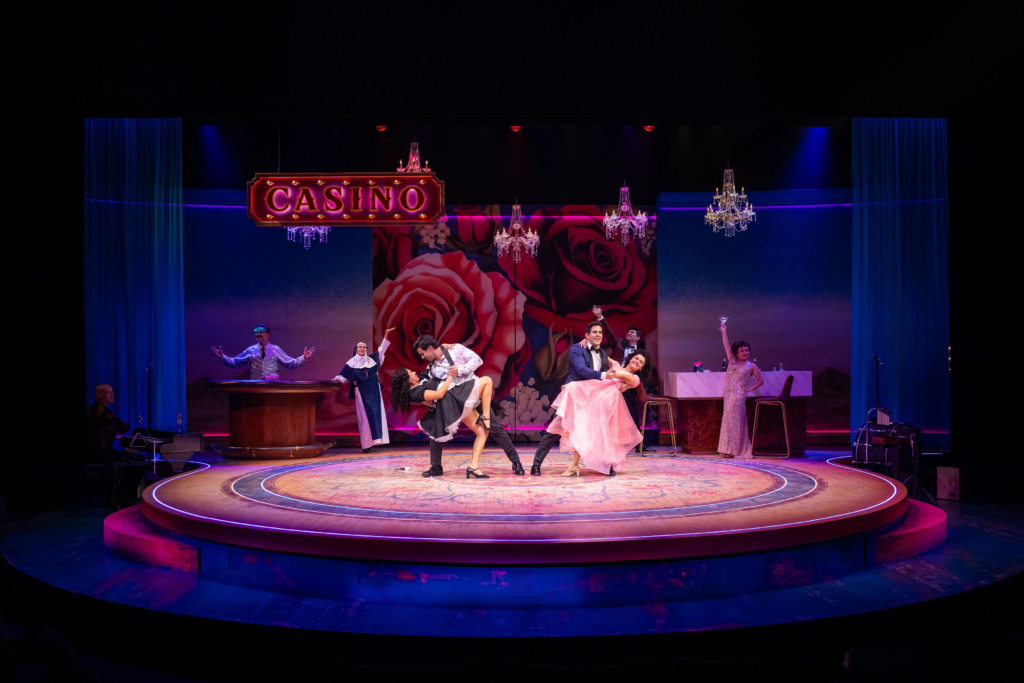
Directed by Marcela Lorca, the production is hilarious, energetic and knowingly excessive. The cast delivers the kind of heightened performances associated with a classic telenovela, pausing after particularly outrageous declarations, holding dramatic poses just a little too long and turning toward the audience with suggestive looks that acknowledge how unbelievable the storyline has become.
Audiences are invited into the joke from the very beginning.
A night of Destiny
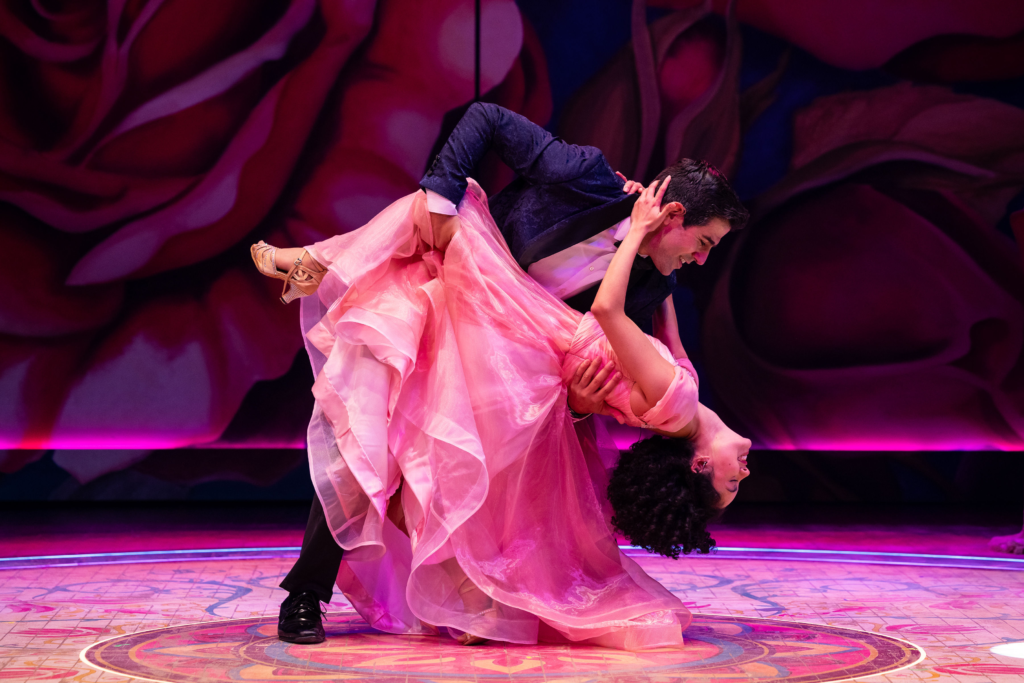
For all of its theatrical excess, “Destiny of Desire” tells an interwoven story of characters worth caring about.
On a stormy night in Bellarica, Mexico, two girls are born into dramatically different circumstances. Ernesto del Río, played by Elijah Reyes, and Hortensia del Río, played by Francisca Muñoz, are working-class parents whose immediate embrace of their newborn daughter establishes one of the production’s most sincere emotional threads.
Across the hall, another birth unfolds inside the wealthy Castillo family.
Bianca Marroquín is wonderfully uninhibited as Fabiola Castillo, the flamboyant former beauty queen whose desperation sets the entire story in motion. Fabiola is selfish and frequently outrageous, but Marroquín makes her endlessly watchable. Zeus Mendoza brings similar force to Armando Castillo, the wealthy casino owner whose family life is more complex appearances suggest.
When Fabiola arranges for the two newborn girls to be switched, the production launches into the kind of sprawling family drama the telenovela does best.
Jessica Lopez plays Pilar Esperanza Castillo, while Victoria Gómez portrays Victoria María del Río. Their intertwined lives form the center of a story that grows increasingly complicated as questions of family, identity and love collide.

The plot becomes increasingly rich as revelations accumulate and secrets wait to surface.
Adam Enrique Hollick brings charm and humor to Sebastián José Castillo, Armando’s estranged son, while Adrián Javier adds another layer to the romantic and familial entanglements as Dr. Diego Mendoza. Al Rodrigo, as Dr. Jorge Ramiro Mendoza, becomes part of an elaborate web of relationships that keeps the audience waiting to see just how everything could possibly resolve.
Then there is Sister Sonia.
Played by Cheryl Umaña, the nun becomes both comic relief and one of the production’s most effective through lines. Umaña has exceptional timing, whether delivering a line, holding a reaction or appearing just when the story needs a dose of absurdity. Sister Sonia also becomes central to one of the production’s biggest surprises as the story reaches its climax (not to be confused with the other climax scene).
Everything works together
The humor of this theatrical telenovela is a byproduct of precise performance. Dramatic pauses, musical stings, improbable revelations and knowing glances all become part of the production’s language.
Music brings everything to the next level.
Though not a traditional musical, riveting music courses through nearly every part of “Destiny of Desire.” Well-timed solo performances reveal stunning vocal talent throughout the ensemble.
The songs also serve a larger theatrical purpose, heightening the drama and signaling the emotional temperature of a scene in the same way that television scores hint at revelations or hidden betrayal.
Ge Enrique, credited as a masterful Musician, is funny and consistently on cue, providing musical punctuation that becomes an essential part of the production’s rhythm. Enrique’s presence helps transform the Wolf Theatre into a live telenovela set, where the music knows what is coming before the characters do.
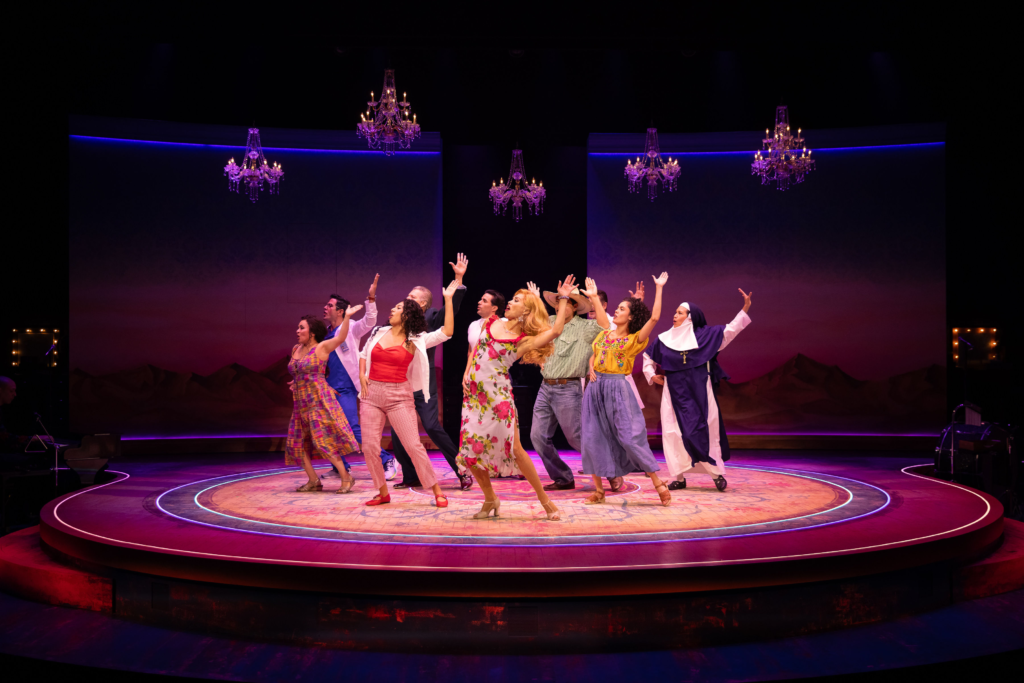
Although the cast is relatively small, the production feels larger than life. Performers move fluidly between scenes, roles and responsibilities, helping transform the physical environment themselves. They rotate and reconfigure Takeshi Kata’s set throughout the performance, creating movement that keeps the production visually active without disrupting its pace.
“Destiny of Desire” works because of how easily the production moves between comedy and sincerity. The audience is in on the joke from the beginning, but characters are never reduced to punchlines. Their relationships and discoveries still carry weight, even when the circumstances surrounding them are deliberately outrageous.
As secrets begin to surface, the story becomes increasingly tangled. Audiences get pulled deeper into Bellarica, wondering will happen to Pilar and Victoria; how the truth will affect the del Río and Castillo families; and what other shocking surprises might still await.
Beneath all of the drama and exaggeration, however, are familiar questions about family, class, privilege, identity and the ways circumstances can shape the course of a life. Zacarías uses the telenovela form to explore those themes without stripping away the humor, romance or spectacle.
By the time audiences say goodbye to the cast of “Destiny of Desire,” they are heavily invested and involved in the characters’ complicated lives, in exactly the way that a telenovela demands.
Zacarías told Applause that she set out to create the “best darn telenovela.” After an evening in Bellarica, it’s clear that she succeeded.
Editor’s note: Destiny of Desire: A Telenovela Play with Music runs through Oct. 4 at the Denver Center for the Performing Arts’ Wolf Theatre. Tickets are available at denvercenter.org.
