Colorado’s 2026 Election Brings Historic Leadership Changes and Major Policy Decisions
With a new governor, groundbreaking congressional victories and major ballot questions on taxes, transportation and civil rights, Colorado voters have set the direction for a consequential period of state governance.
Colorado’s political leadership is entering a new chapter following Tuesday’s midterm election, with voters electing a new governor, returning Democrats to statewide executive offices and making history through several congressional victories. The results point to competing public priorities on taxation, education, transportation and civil rights, with several closely contested ballot measures remaining unresolved as votes continue to be counted.
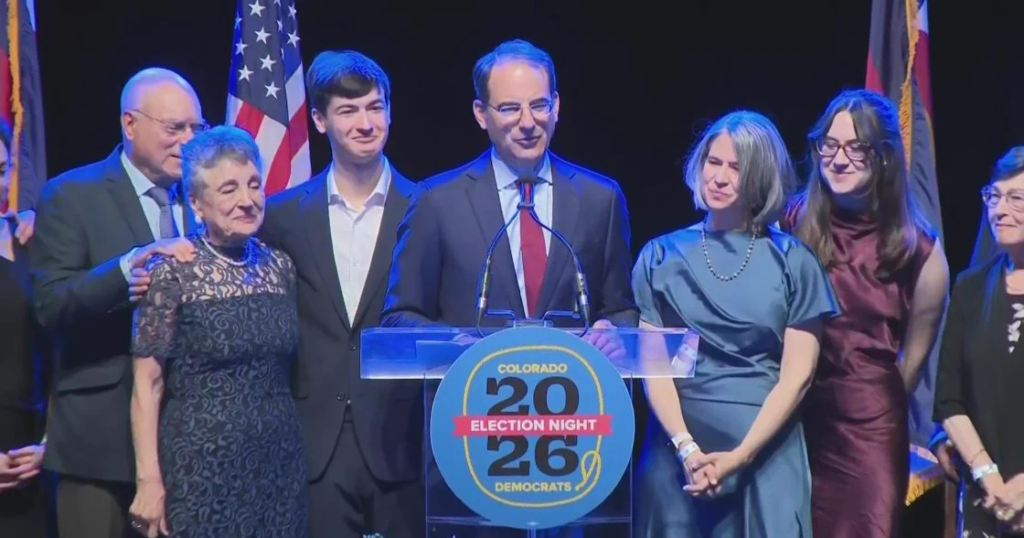
Democrat Phil Weiser won the governor’s race, succeeding term-limited Gov. Jared Polis.
Jena Griswold, Amanda Gonzalez and Sen. Jeff Bridges also won their respective contests for attorney general, secretary of state and state treasurer, preserving Democratic control of Colorado’s statewide executive offices.
Congressional races brought significant changes in representation. Melat Kiros became the first Gen Z woman elected to the U.S. Congress, winning Denver’s 1st Congressional District. Manny Rutinel defeated Republican incumbent Gabe Evans in the competitive 8th Congressional District, while U.S. Rep. Joe Neguse secured another term representing the 2nd Congressional District.

Voters also considered 14 statewide ballot measures, along with local proposals that could have lasting effects on public financing, government accountability and individual rights.
The emerging picture illustrates the complexity of Colorado’s electorate. Democrats maintained their advantage in statewide candidate races, while voters expressed differing preferences on specific policy proposals. Those decisions will shape the responsibilities and limitations facing the leaders elected to govern.
Weiser Wins Governor’s Race as Democrats Retain Statewide Control
Colorado Attorney General Weiser defeated Republican Victor Marx, extending Democratic control of the governor’s office, which the party has held since 2007.
He will take office after eight years as attorney general, a tenure that included consumer protection initiatives, antitrust enforcement and legal challenges involving state and federal authority.
His campaign emphasized housing affordability, education, economic opportunity and public safety. Among his proposals was an initiative to develop 40,000 additional affordable homes, responding to housing costs that continue to affect residents across urban, suburban and rural Colorado.
The incoming administration will inherit difficult budget decisions, including growing Medicaid expenditures, demands for education funding and infrastructure needs. Weiser’s experience in litigation against the federal government may also influence Colorado’s response to federal policies affecting immigration, health care and environmental protections.
The election will introduce new leadership throughout the executive branch. Griswold, the outgoing secretary of state, won the attorney general’s race, while state Sen. Bridges was elected treasurer.
Democrats will retain control of all four statewide executive offices, creating opportunities for coordination on fiscal policy, public administration and legal priorities. The new leadership team will also be responsible for addressing persistent challenges that have remained prominent despite years of Democratic governance.
Melat Kiros Makes History With Generational Shift in Congress
One of the election’s most significant milestones came in Colorado’s 1st Congressional District, where 29-year-old Democrat, Kiros, won the seat held by Diana DeGette since 1997.
An Ethiopian American attorney and the first woman of African descent elected to Congress from Colorado, she also became the first Gen Z woman elected to the U.S. Congress.
Born in Addis Ababa, Ethiopia, Kiros immigrated to the United States with her family as an infant and grew up in Denver. Her upbringing and experiences within an immigrant family influenced her political priorities, particularly concerning economic opportunity and access to essential services.

Her general election victory followed an unexpected Democratic primary win over DeGette, ending the longtime congresswoman’s nearly three-decade tenure representing Denver.
Kiros, who identifies as a democratic socialist, campaigned on affordability, universal health care, immigration reform and changes to U.S. foreign policy. Her positions on federal immigration enforcement and U.S. military aid to Israel have also generated debate within and beyond the Democratic Party.
Her election introduces a new generation of representation to Colorado’s congressional delegation. It also places a younger voice in national debates over economic inequality, social programs and the direction of Democratic policymaking.
The transition is especially notable in a district that has been represented by the same member of Congress for nearly 30 years. She will now face the challenge of translating a platform centered on substantial policy change into legislative action.
Amanda Gonzalez Becomes Colorado’s First Latina and Openly LGBTQ Secretary of State
Colorado voters also made history by electing Gonzalez as the state’s first Latina and first openly LGBTQ secretary of state.
The Jefferson County clerk and recorder defeated Republican James Wiley following a campaign that relied heavily on volunteer organizing and community relationships.
An attorney and former executive director of Colorado Common Cause, Gonzalez has worked extensively on voting rights, election administration and government accountability.
Her Mexican American heritage is closely connected to that work. Her paternal grandmother immigrated from San Luis Potosí, Mexico, and eventually became a naturalized U.S. citizen. Gonzalez has also discussed the language discrimination experienced by her father, who grew up speaking Spanish in Southern California.
Her victory followed a June primary in which she defeated state Sen. Jessie Danielson despite being significantly outspent, according to her campaign. The result demonstrated the influence of grassroots mobilization in a statewide political contest.
Gonzalez will succeed Griswold in January, assuming responsibility for Colorado’s elections, business registrations, campaign finance reporting and other administrative functions.
She has pledged to defend the state’s mail-ballot system, maintain election security and protect voter access. Her administration will begin amid continuing national scrutiny of election procedures, federal involvement in election administration and public confidence in democratic institutions.
For Latina and LGBTQ Coloradans, her election represents a historic expansion of statewide political representation. Her work in office will determine how those commitments translate into the administration of essential government services.
Manny Rutinel Flips Colorado’s Competitive 8th Congressional District
The battle for Colorado’s 8th Congressional District drew national attention as Democrats and Republicans competed for a seat that could influence control of the U.S. House of Representatives.
Rutinel defeated Republican incumbent Gabe Evans, returning the seat to Democratic control.
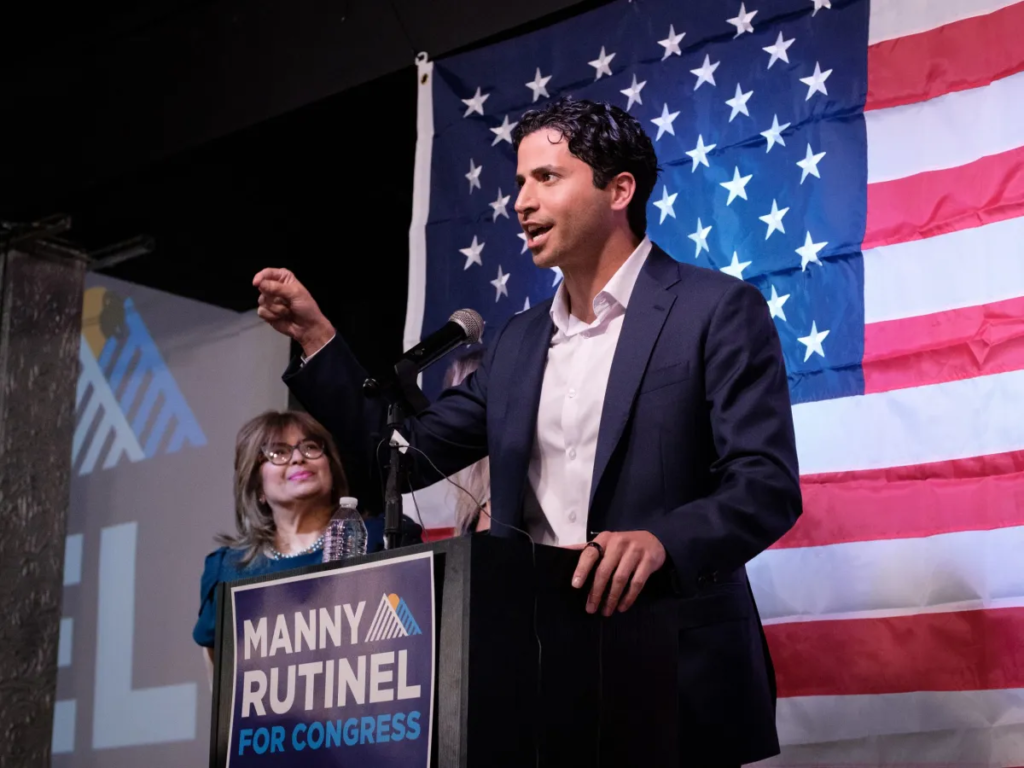
Established following the 2020 census, the district encompasses Denver’s northern suburbs and communities extending into Weld County. It has the largest Hispanic and Latino population among Colorado’s congressional districts and has switched partisan control in each of its first three elections.
A former state representative and attorney, Rutinel emphasized his working-class upbringing and the economic pressures facing Colorado families. His campaign focused on affordability, health care and opposition to several policies advanced by President Donald Trump’s administration.
Evans, a former police officer and Army helicopter pilot, highlighted public safety, border security and conservative approaches to economic policy.
According to Colorado Public Radio, more than $41 million was spent on the contest, including spending by candidates, political parties and outside organizations.
Rutinel’s victory provides Democrats with an additional seat in Congress and reflects the importance of Colorado’s rapidly changing suburban communities in national elections.
The district’s continued competitiveness also places significant expectations on its incoming representative, particularly concerning housing, transportation, employment and federal policy affecting immigrant families.
Joe Neguse Reelected to Congress
Democratic U.S. Rep. Neguse won reelection in Colorado’s 2nd Congressional District, defeating Republican Kelley Dennison and Libertarian Gaylon Kent.
First elected in 2018, he has become a prominent member of Democratic congressional leadership. His legislative work has included wildfire recovery, public lands protection, infrastructure, education and community development.
The district includes Boulder, Fort Collins and mountain communities where environmental management, housing costs, higher education and federal investment remain important concerns.
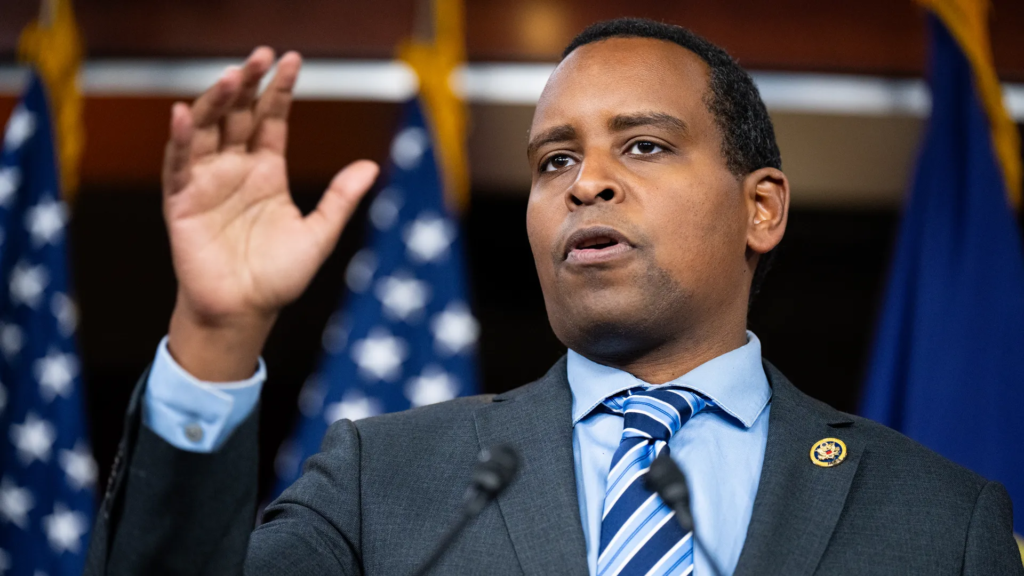
His reelection provides continuity within a congressional delegation experiencing significant changes elsewhere.
Neguse’s leadership position and established relationships in Congress could prove consequential as Colorado seeks federal resources for disaster recovery, infrastructure projects and public lands management.
U.S. Sen. John Hickenlooper’s reelection provides additional continuity in Washington, with Colorado’s two Democratic senators continuing to represent the state in the upper chamber.
CoCo Passenger Rail Measure Gains Support
One of the election’s most consequential regional transportation proposals was Front Range Passenger Rail District Ballot Issue 7A, which would establish dedicated funding for the Colorado Connector, known as CoCo.
Early results showed the measure leading, with supporters claiming victory on election night.
The proposal authorizes a permanent 0.333% sales and use tax within the district, projected to generate approximately $295 million annually, to support passenger rail construction, operations and associated improvements.
The funding would help extend planned rail service south of Denver through Colorado Springs to Pueblo, while supporting improvements to connections along the Front Range.
The broader project envisions passenger rail between Fort Collins and Pueblo, providing an alternative to Interstate 25 travel and potentially strengthening connections among major employment, education and population centers.
Supporters have emphasized the potential for reduced highway congestion, greater transportation accessibility and regional economic development. Opponents have questioned the project’s cost, long-term financial commitments and the reliability of proposed service timelines.

If approved, the measure would represent a substantial investment in Colorado’s transportation infrastructure. The project’s success will depend on coordination among public agencies, rail operators and local governments, along with sustained public oversight of spending and construction.
Amendment 87 Places Colorado’s Tax Structure at a Crossroads
Among the statewide ballot proposals, Amendment 87 generated significant attention because of its potential to restructure Colorado’s income tax system.
The measure would replace the state’s flat income tax with graduated rates, reducing taxes on lower incomes while increasing rates on higher incomes.
The additional revenue would support public education, health care and early childhood programs.
Supporters argue that the measure would distribute the tax burden more equitably while generating funding for services facing substantial financial pressures. Opponents contend that increasing taxes on higher earners and businesses could discourage investment and weaken Colorado’s economic competitiveness.
Early returns showed voters narrowly divided, leaving the result unresolved as additional ballots were counted.
Voters also considered Proposition 136, which would cap the state’s income tax rate at 4.4%. Preliminary returns showed the competing proposal trailing.
The measures presented fundamentally different approaches to state taxation, with implications for public spending, household finances and future budget decisions.
The outcome of Amendment 87 could establish one of the most significant changes to Colorado’s income tax system in decades.
Propositions 134 and 135 Could Change Policies Affecting Transgender Youth
Two closely watched ballot measures addressed policies affecting transgender youth, drawing sharply different arguments about individual rights, medical care and participation in athletics.
Proposition 134 would establish rules governing school and collegiate sports participation based on sex as defined by reproductive biology, restricting transgender girls and women from participating on female teams under most circumstances.
Proposition 135 would prohibit certain surgeries related to sex characteristics for minors and restrict funding and insurance coverage for procedures covered by the measure.
Preliminary returns showed both measures receiving narrow majority support, although neither result had been finalized.
Supporters of Proposition 134 have argued that sex-based eligibility rules are necessary to maintain fairness in female athletic competition. Opponents contend that the proposal would discriminate against transgender students and restrict participation in educational activities.
Supporters of Proposition 135 emphasize concerns about the long-term consequences of medical procedures performed on minors. Opponents argue that the measure would limit medical decision-making and interfere with decisions involving patients, families and health care professionals.
If adopted, the proposals could affect Colorado schools, medical providers, insurers and families, with possible legal challenges over their implementation.
Education Funding and Public Safety Measures Draw Attention
Colorado voters also considered proposals addressing school funding, criminal penalties and the use of state resources.
Proposition NN would allow Colorado to retain additional revenue above existing Taxpayer’s Bill of Rights limits, directing funds toward K-12 education during the first decade.
Early returns indicated majority support for the proposal.
Two criminal justice measures also drew significant attention. Proposition 132 would increase penalties for certain fentanyl offenses, while Proposition 133 would impose stricter punishments for human trafficking involving minors, including life imprisonment without parole for specified convictions.
Preliminary results showed substantial support for both measures.
Other proposals addressed cooperation between local law enforcement and federal immigration authorities, natural gas access, hunting and fishing rights, mail-ballot identification, ballot language, congressional redistricting and conservation funding.
Readers can consult the Colorado General Assembly’s official 2026 State Ballot Information Booklet for the legal and fiscal implications of each proposal.
What Colorado’s Election Results Mean for the State
Colorado’s 2026 election preserves Democratic control of statewide executive leadership while introducing changes that could influence congressional priorities and public policy for years to come.
Weiser will enter the governor’s office with responsibility for addressing affordability, public spending and economic development. Griswold, Gonzalez and Bridges will oversee institutions central to legal accountability, elections and state finances.
Congressional victories by Kiros and Rutinel create additional changes in the state’s representation in Washington. Kiros’s election marks a generational milestone and brings the experiences of an Ethiopian American woman to Congress, while Rutinel’s victory changes the partisan representation of one of Colorado’s most competitive districts.
Neguse and Hickenlooper provide continuity within the federal delegation, preserving established relationships and experience as Colorado navigates changing federal priorities.
The ballot measures reveal a more varied set of political preferences. Voters expressed differing positions on revenue generation, transportation investment, education spending, public safety and civil rights, demonstrating that electoral support for a political party does not necessarily translate into agreement across policy areas.
The unresolved measures will have particular significance for the next governor and state legislature, potentially changing Colorado’s revenue structure, funding obligations and regulatory responsibilities.
For residents, the most immediate questions concern whether elected officials can address rising living costs, provide reliable public services and maintain confidence in the institutions responsible for governing.
The November election has established Colorado’s next group of leaders and advanced several major policy decisions. Their significance will be measured through the laws enacted, investments delivered and practical effects on communities throughout the state.
Editor’s note: Election results are available on the Colorado Secretary of State’s Election Night Reporting found here.
