
Election Day Arrives in Colorado as Voters Decide Key Primary Races Amid Wildfire Challenges
Today, Colorado voters head to the polls to determine which candidates will advance to November’s general election. The outcome will conclude one of the state’s most consequential election cycles in recent years.
With every statewide constitutional office on the ballot except lieutenant governor, competitive congressional races across the state and several closely watched legislative contests will shape the political landscape heading into the fall.
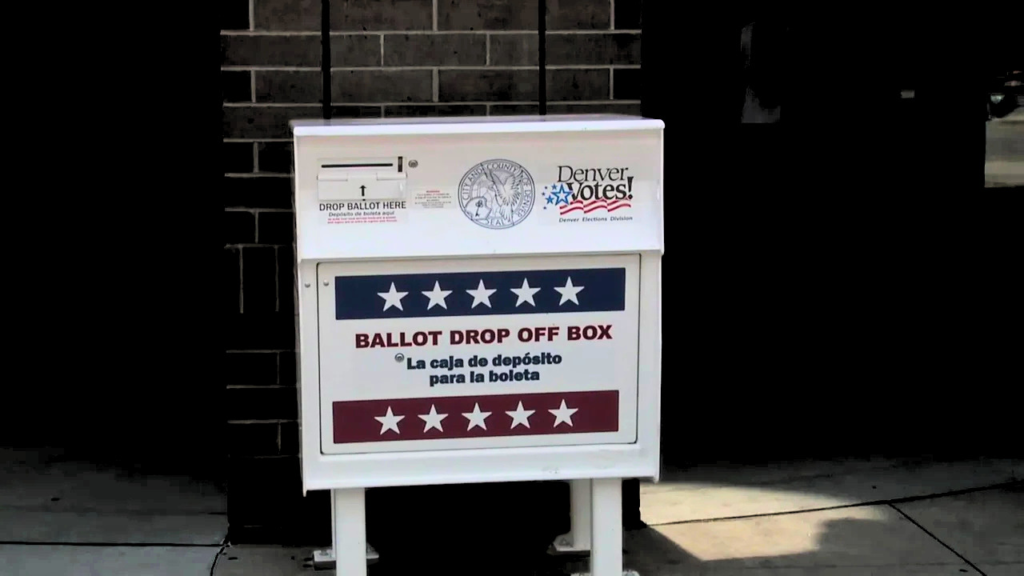
Polls and ballot drop boxes close at 7:00 p.m., and any voter already in line at a voter service center by that deadline is entitled to vote.
Colorado’s all-mail voting system means most registered voters have already received ballots. However, with the deadline to return ballots through the U.S. Postal Service long passed, voters must return completed ballots to an official drop box or voter service center before the deadline, or vote in person.

According to the Colorado Secretary of State’s Office, the state has 437 ballot drop boxes and 137 voter service centers available for today’s election.
Statewide Races Attract National attention
This year’s primary features contests for governor, attorney general, secretary of state, state treasurer and one U.S. Senate seat, along with elections in all eight congressional districts. Several congressional incumbents are unopposed, while others face contested primaries that have attracted statewide and national attention.
On the Democratic side, voters are choosing between U.S. Senator Michael Bennet and Colorado Attorney General Phil Weiser, two well-known state leaders with extensive public service experience. The candidates share similar positions on several policy issues, but their campaigns have emphasized differing leadership styles and visions for the state’s future.
The Republican gubernatorial primary includes Colorado State Representative Scott Bottoms, State Senator Barbara Kirkmeyer and local minister Victor Marx. Their platforms each present differing approaches to issues like public safety, immigration and taxes.
Another closely watched race is unfolding in Colorado’s 1st Congressional District, which includes most of Denver, along with Glendale and Holly Hills.
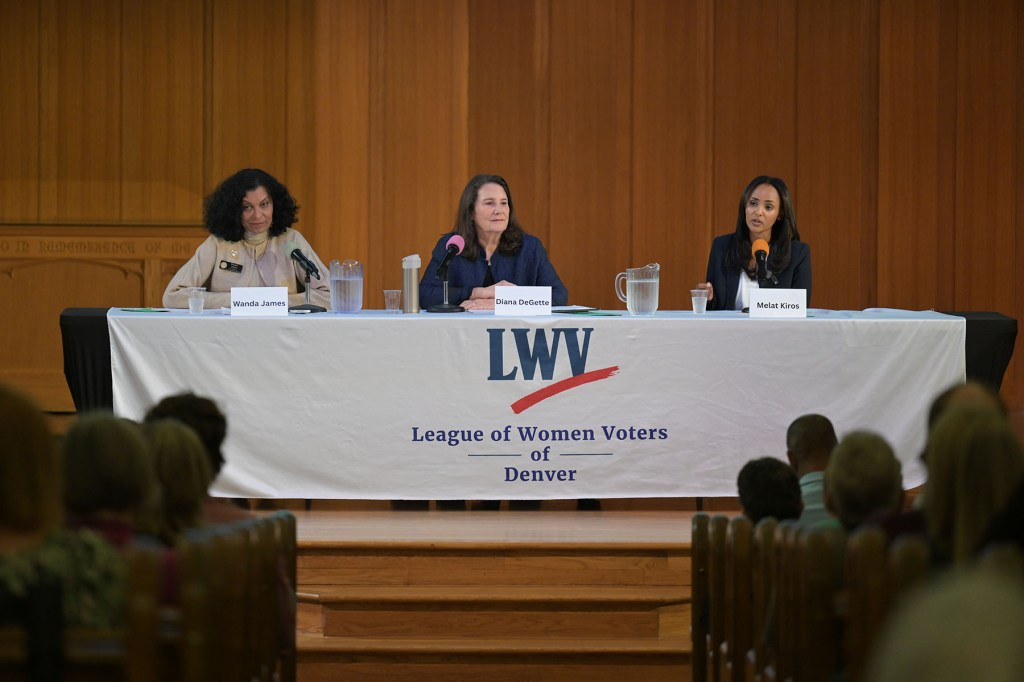
The district has been represented by U.S. Representative Diana DeGette since 1997. Now, two Democratic challengers seek to unseat the incumbent. Melat Kiros, an attorney and doctoral student whose campaign emphasizes grassroots fundraising and a pledge not to accept PAC contributions; and Wanda James, a University of Colorado regent who recently made headlines after being censured by the CU Board of Regents.
The winner of the race will face Republican Christy Peterson, who is running unopposed in the Republican primary.
With the outcomes of these primary elections
With the outcomes of these primary elections expected to shape state government for years to come, political observers are watching voter turnout closely as Colorado voters determine which candidates will advance to the general election.
Key Issues Shaping Colorado’s Primary Election
Candidates have focused on a wide range of priorities throughout the campaign, with several issues consistently showing up as central themes in races across Colorado:
- Housing affordability: Rising home prices and rental costs, particularly along the Front Range, have prompted candidates to propose numerous approaches to increasing housing supply and expanding affordable housing.
- The cost of living: Inflation, property taxes, health care costs and household expenses are recurring topics as candidates outline plans to strengthen Colorado’s economy.
- Public safety: Candidates have debated crime prevention strategies, law enforcement funding, sentencing policies, and efforts to address the state’s fentanyl epidemic.
- Water and wildfire resilience: As Colorado experiences prolonged drought conditions, extreme weather and active wildfire seasons, candidates have discussed forest management, watershed protection and emergency preparedness.
- Reproductive rights: Candidates have outlined differing views on protecting access to abortion and reproductive health care following changes in federal abortion policy.
- Immigration and border policy have become increasingly prominent issues in statewide and federal races, prompting debated over the state’s role in responding to migrants, public safety and workforce needs.
- Education: Candidates have discussed K-12 funding, teacher recruitment and retention, higher education affordability, workforce development and expanding career and technical education opportunities.
Although candidates differ on how best to address these issues, today’s primary election will determine which visions advance to the general election in November.
Secretary of State encourages voter participation
Colorado Secretary of State Jena Griswold urged eligible voters to cast their ballots before polls close.
“I encourage every eligible voter to make their voice heard in the 2026 Primary Election. Find your closest drop box or voter center at CoVoteColorado.gov,” she shared in an Election Day morning announcement.
Election Night reporting will begin after 7:00 p.m. on the Secretary of State’s website as county clerks report unofficial results throughout the evening.
State election officials also reminded voters to rely only on trusted election information from official Colorado government sources and to use BallotTrax if they wish to monitor the status of their returned ballot.
Wildfires Create Additional Challenges for Some Voters
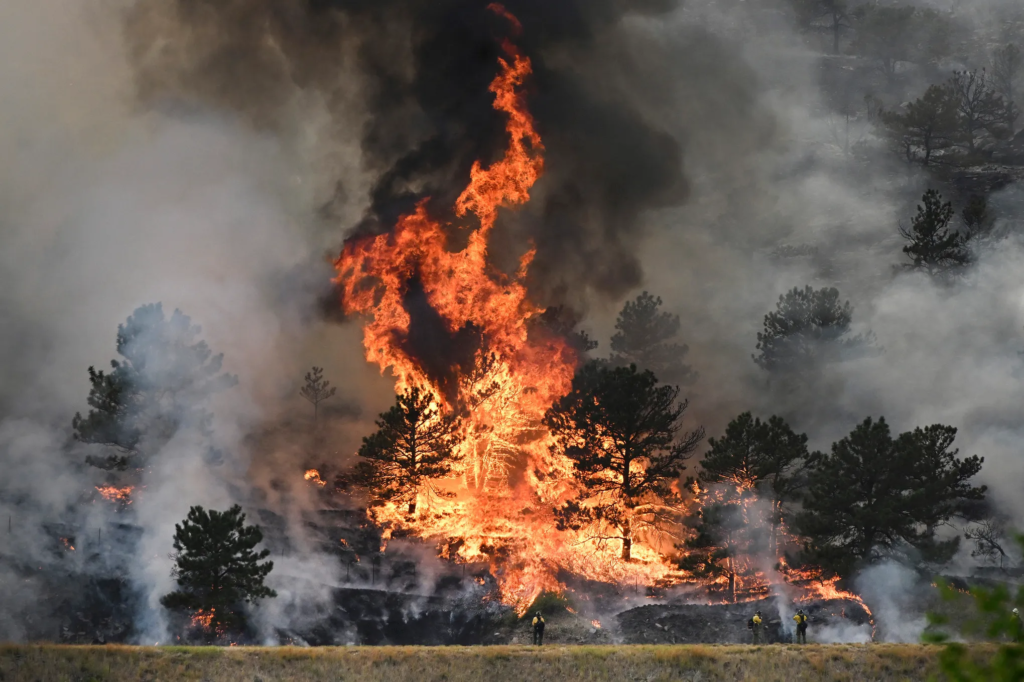
Election Day also arrives as multiple wildfires burn across Colorado, prompting evacuations in several communities and creating additional obstacles for displaced residents hoping to vote.
The Secretary of State’s Office issued special guidance Tuesday morning for eligible voters affected by evacuation orders.
“Every eligible Coloradan should know about the resources available to them so they can make their voices heard,” Griswold shared. “My heart goes out to everyone impacted by ongoing wildfires across the state.”
State election officials said voters forced to evacuate who have not yet voted may visit any voter service center in Colorado to request a replacement ballot.
Those who visit a voter center within their home county will be able to vote on all contests appearing on their ballot. Voters who visit a center outside their home county may receive a replacement ballot containing statewide races only.
Officials also noted that voters who still possess their original mail ballot may return it to any official drop box or voter center in the state before 7:00 p.m. Alternatively, displaced voters may request an emergency ballot or contact their county clerk for assistance.
Security and Election Integrity
Election security and voter confidence have remained prominent topics throughout the 2026 election cycle. Earlier this month, Colorado joined a multistate lawsuit challenging portions of a presidential executive order that would have required documentary proof of U.S. citizenship to register to vote in federal elections. State officials argued the order exceeded federal authority and interfered with states’ constitutional responsibility to administer elections. A federal judge temporarily blocked key provisions of the order while the lawsuit moves forward.
Colorado continues to operate one of the nation’s most established vote-by-mail systems, combining paper ballots with signature verification, ballot tracking, bipartisan oversight and post-election risk-limiting audits. Yet, today’s primary election also comes amid ongoing legal battles over election administration.
On Monday, Jun. 29, the Colorado Supreme Court struck down a series of proposed ballot initiatives that would have circumvented the state’s independent redistricting commission and authorized new U.S. House districts for the 2028 and 2030 elections.
Election administration was in the spotlight on the eve of today’s primary election after the Colorado Supreme Court unanimously ruled that a series of proposed ballot initiatives seeking to redraw the state’s congressional districts could not appear on the November ballot. The proposals would have suspended Colorado’s independent redistricting commission for the 2028 and 2030 elections and authorized new congressional maps as part of a broader national debate over mid-decade redistricting.
As Colorado voters weigh the candidates, issues and competing visions for the state’s future, today’s primary also highlights the importance of confidence in the electoral process itself. From secure ballot tracking and independent audits to ongoing legal debates over election administration, the integrity of the voting system remains central to ensuring every eligible voter has the opportunity to make their voice heard.
When the Polls Close
Once polls close this evening, counties will begin releasing unofficial results as ballots are processed and counted. Because Colorado accepts ballots deposited by the deadline and continues signature verification after Election Day, results may continue to change as additional ballots are counted over the coming days. Final certification of the election will occur after counties complete canvassing and required post-election audits.
For voters who have not yet participated, election officials stress that there is still time to cast a ballot. Whether returning a completed mail ballot to an official drop box or voting in person at a voter service center, every eligible Colorado voter has until 7:00 p.m. today to make their voice heard.
The Secretary of State’s Office encourages voters to rely on official sources for election information, including ColoradoSOS.gov and GoVoteColorado.gov, and reminds voters that BallotTrax allows them to monitor their ballot from the time it is mailed until it is counted. Election officials also note that anyone who experiences harassment or intimidation while voting should contact local law enforcement or the Colorado Attorney General’s Office.
Editor’s note: Learn more about Colorado’s Primary Election at GoVoteColorado.gov.
