
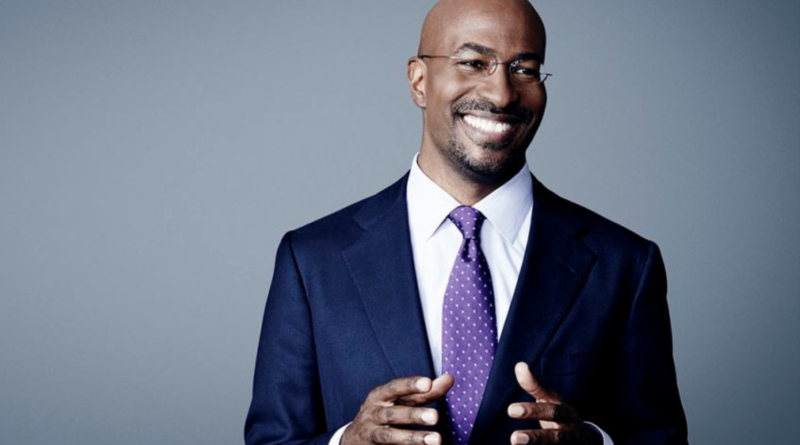
Van Jones: A Voice for Justice
World-renowned political commentator named 2025 Rachel B. Noel Distinguished Visiting Professor
Van Jones is a prominent media personality, lawyer, activist and social entrepreneur known for his expert political commentary and his remarkable ability to rally support for causes from environmentalism to civil rights.
His professional contributions have influenced contemporary social and political discourse, and his dedication to racial equity and criminal justice reform has shaped policy while inspiring dialogue around change. With unique perspectives and a strong counter-narrative to divisive socio-political discourse, he is an advocate for unity in the most challenging times.
On Wednesday, April 23, Metropolitan State University of Denver (MSU Denver) will welcome the aficionado to campus as the keynote speaker for the 2025 Rachel B. Noel Distinguished Visiting Professorship, acknowledging the alignment of his life’s work to the values championed civil rights leader, Rachel B. Noel. On the same day, he will deliver a community keynote during a scholarship and “Hope for the Future” award ceremony at Shorter Community AME Church.
In an event dedicated to the preservation of Noel’s legacy of educational equality and reform, Jones’ compelling, honest and authentic commentary is sure to foster meaningful dialogue on pressing social issues at a time when cohesive communication is needed most.

Behind the Microphone
Born Anthony Kapel Jones in September 1968, he and his twin sister, Angela, were raised in a family that valued education and activism. Their mother, Loretta Jean (née Kirkendoll), was a high school teacher, and their father, Willie Anthony Jones, was a middle school principal.
The family lived in Jackson, Tennessee, where Jones’ grandfather led a Christian Methodist Episcopal Church. At age 17, he was working as an intern at The Jackson Sun, when he adopted his now-familiar nickname, “Van.”
After graduating from high school, he attended the University of Tennessee at Martin, earning a Bachelor of Science degree in communication and political science. He continued internships with Louisiana’s Shreveport Times and the Nashville Bureau of the Associated Press, and created a number of campus-based publications. Eventually, he veered away from journalism and enrolled at Yale Law School.
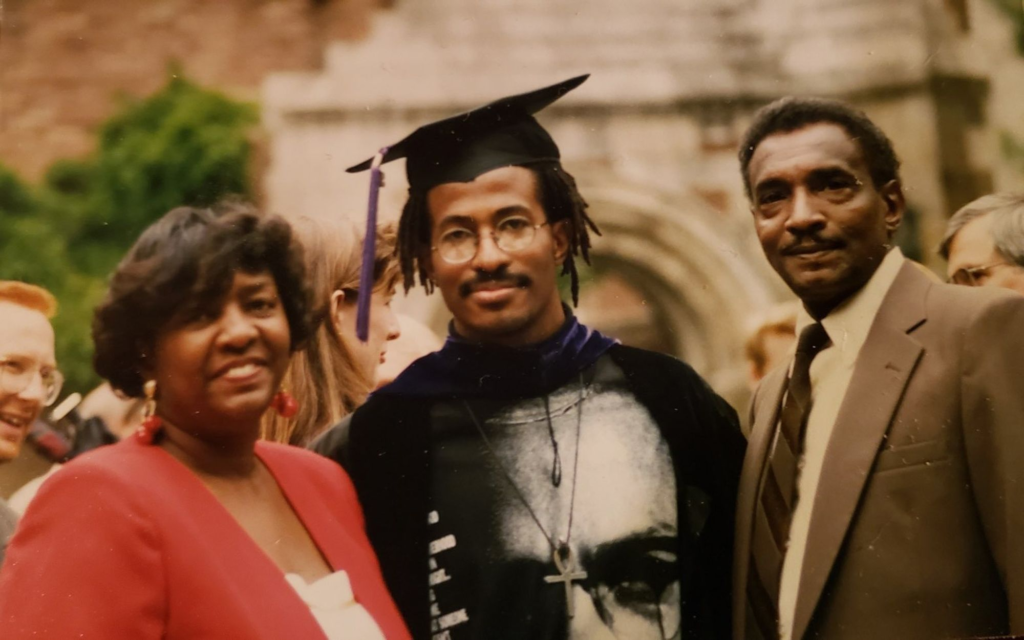
Socio-political turmoil was erupting in areas throughout the United States, including in California, where law enforcement officers were captured on tape brutalizing Rodney King during a traffic stop. Jones was selected by the Lawyers Committee for Civil Rights Under Law to serve as a legal observer to protests after the acquittal of three of the officers involved.
He was arrested during the protests in an incident that he says accelerated his political radicalization. That catalyzing event, along with the racially inequitable prosecution of drug use he saw among the student body at Yale, sparked his revolutionary ideals and laid the groundwork for his future endeavors.
Early Career and Activism
After graduating from Yale in 1993, Jones moved to San Francisco, where he co-founded the Ella Baker Center for Human Rights in 1996. The center promoted criminal justice reform and campaigned for alternatives to youth incarceration while advocating for restorative justice.
In 2005, he expanded his focus to environmental issues, founding Green For All, which takes an intersectional approach to environmental sustainability and economic justice. His efforts led to the passage of the Green Jobs Act in 2007, which allocated $500 million for green job training programs.
In 2008, he authored “The Green Collar Economy,” proposing that environmental reforms can protect the planet while addressing economic disparities.
“Healing the wounds of the earth and its people does not require saintliness or a political party, only gumption and persistence. It is not a liberal or conservative activity; it is a sacred act,” he writes.
Beyond his environmental work, Jones co-founded Color of Change in 2005. The online organization that holds corporations and public officials accountable for perpetuating racial injustice.
“The forces that shape our lives are interrelated. We cannot end racism in one area without tackling it in all areas,” the organization’s website shares. “Valuing Black lives is not a trend to exploit. It requires real action, a commitment to dismantling corporate cultures and profit structures that put profit above Black lives.”
As initiatives promoting diversity, equity and inclusion these initiatives come under attack by President Donald Trump’s administration, Color of Change’s “#BeyondTheStatement” campaign calls for corporate accountability and structural change through fair wages.
Political Involvement and Advocacy
Jones’ commitment to environmental and social justice garnered the attention of former U.S. President Barack Obama, leading to his appointment as Special Advisor for Green Jobs, Enterprise and Innovation at the White House Council on Environmental Quality in 2009.
He worked to promote environmentally-friendly policies and initiatives, overseeing multi-billion dollar investments into skills training and jobs development. He made a significant impact, but within the first year due to politically-fueled controversy.
In his resignation statement he wrote, “On the eve of historic fights for healthcare and clean energy, opponents of reform have mounted a vicious smear campaign against me. They are using lies and distortions to distract and divide.”
Rebuilding the Dream
Despite the political kerfuffle, Jones’ political involvement is vast, including roles as a grassroots director for Huffington Post founder, Arianna Huffington, and as a senior fellow at the Center for American Progress.
In 2012, he published his second book, titled, “Rebuild the Dream,” following his creation of a center-left political organization by the same name in 2011. The book is a reflection of his political journey and a guide to making a difference through political activism and investments into systemic advancement.
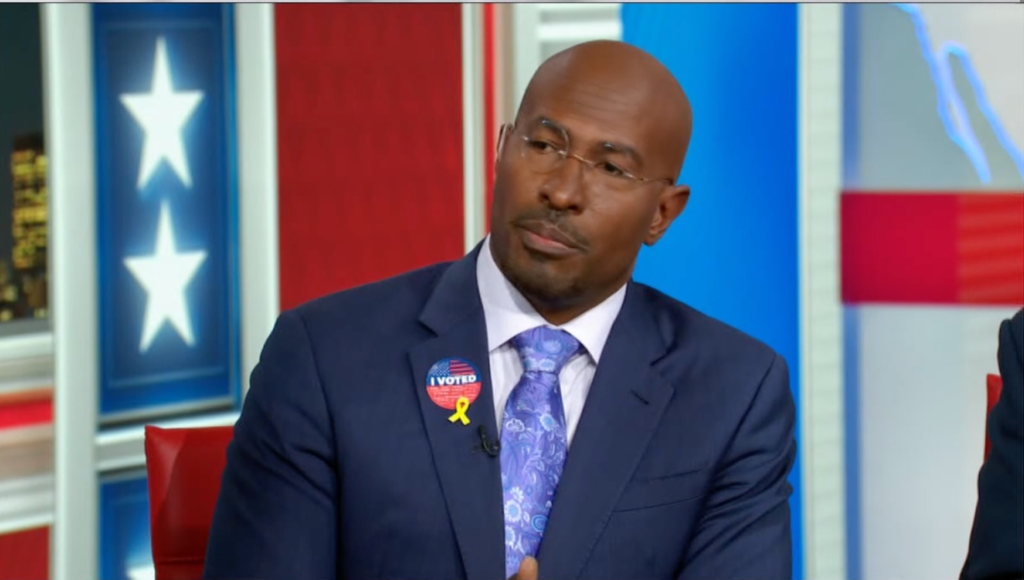
In 2013, he was announced as a co-host of “Crossfire,” a political debate show on CNN. After the show ended in 2014, he continued as a regular contributor on the network, speaking on social, legal and political issues. Eventually, he launched a news feature documentary series called “The Messy Truth,” followed by a book titled, “Beyond the Messy Truth: How We Came Apart, How We Come Together,” in 2017.
Jones’s eloquence and insight propelled him to his current stature as a highly-respected and highly sought-after media personality. His approach towards political conflict has evolved into multilateralism, and his ability to bridge ideological divides through constructive dialogue has earned the respect of audiences at numerous speaking engagements.
In a 2017 interview with YES! Magazine, he explained that rather than speaking to any particular audience, his message is for “everybody who’s interested in American politics.”
“Unlike a lot of progressives and liberals, I don’t need people to agree with me for me to feel that it’s a productive exchange. I’m more interested in understanding than agreement,” he said. “In a democracy you get to disagree.”
When Truth Gets Messy
In “Beyond the Messy Truth,” Jones writes, “Right now, too many of us seem to approach liberal causes and conversations mainly by looking for ways to show other progressives where they are wrong. Too many of us can deconstruct everything but can’t reconstruct anything and make it work.”
After the Presidential Election in 2016, he called for a collaborative response to the political unrest after President Trump’s first election. Amid chaos and outrage, the impassioned author wrote, “Too many of us know how to run a protest against the adults on our campuses but don’t know how to run a program for children in our neighborhoods.”
“…Too many of us know how to call people out but don’t know how to lift people up. And this reality creates internal dangers as real as anything we face externally.”
Following a presidency marred by controversy and the coronavirus pandemic, President Trump was defeated in 2020, in an election with the highest voter turnout percentage since 1900.
Jones expressed his concerns around the potential for a second term for the disgraced leader after the first debate of the 2020 election cycle, cautioning against his failure to condemn white supremacy.
Emboldened by a legion of voters whose loyalty was strengthened by the racialism surrounding his campaign, President Trump was re-elected to serve a second term in 2024, sending shockwaves of fear and disappointment nationwide.
”It’s not the elite that’s going to pay the price. It’s people who woke up this morning with a dream and are going to bed with a nightmare,” Jones said during an emotional, post-election response.
Still, he remains dedicated to a vision for socio-political progress that’s rooted in unification, teamwork and compassion.
“I’ve never seen a bird fly with only a left wing. Never seen a bird fly with only a right wing. We need each other,” he said, addressing political polarization at Salt Lake City Community College in 2018. “It takes two wings to fly.”
During an Atlassian convening in 2023, he echoed his support for collaboration, saying, “The most important slogan that I have is ‘stay human with each other. If you want to do something monumental, you’re gonna have to work with people who look very different than you. Think differently. Pray differently. Love differently. Or you have no shot.”
Expanding His Influence
Jones is a co-founder of “#cut50,” an organization aiming to reduce the U.S. prison population by 50%; and Dream.org, a nonprofit working through environmentalism, justice and technology to create change for underrepresented populations. He created the “#YesWeCode” initiative – now Dream Corps TECH – to connect underserved communities to technology and expose young people to coding.
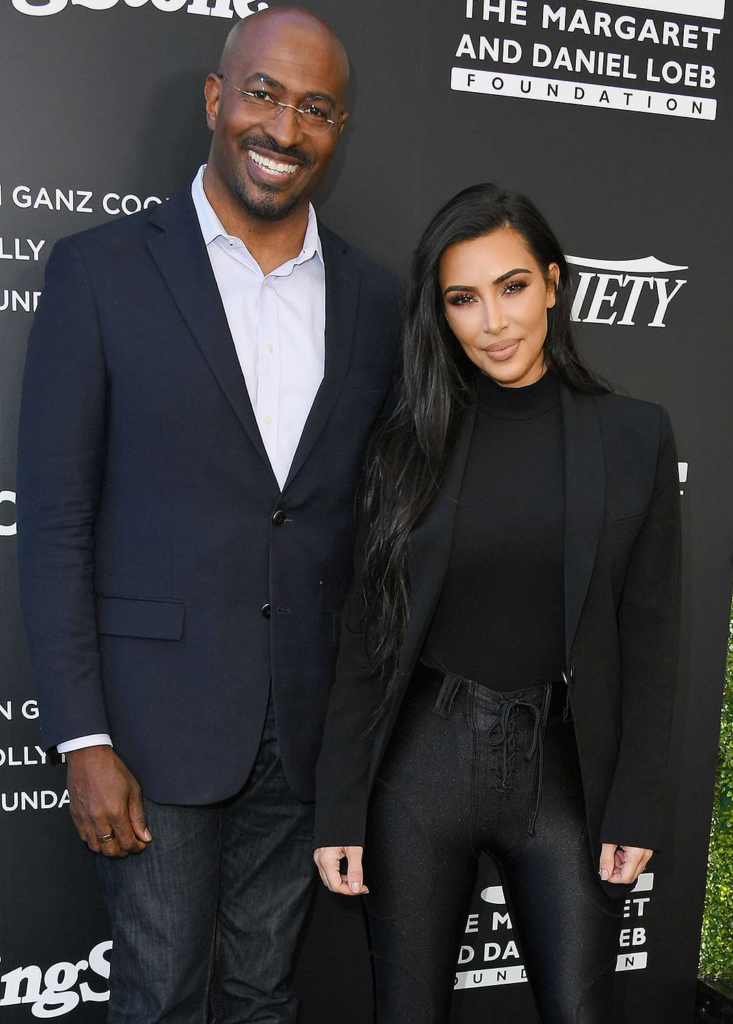
He was formerly CEO of the REFORM Alliance, created by rappers Jay Z and Meek Mill to transform the criminal justice system; and he believes that the green workforce could play a vital role in criminal justice reform and reduced rates of recidivism.
“Formerly incarcerated people deserve a second shot at life – and all obstacles to their being able to find that second chance in the green sector should be removed,” he says.
With mixed impressions of his political analysis – especially amid mounting tensions and a nation stuck deep in political divide – Jones’ truthfulness captivates audiences with authenticity not commonly found in his arena.
To stimulate solution-based conversation around the country’s biggest problems, he hosted the “Uncommon Ground” podcast from 2021 to 2022, bringing people together across lines of difference.
Chris Cillizza, a political commentator who worked at CNN from 2017 to 2022 calls Van Jones the “most honest man in politics,” citing his bipartisan approach to political analysis as what sets him apart.
“When I was at CNN, I was an admirer of Van. After I left the network, I was even more appreciative of his candor, his willingness to challenge entrenched orthodoxies and his openness to being wrong.”
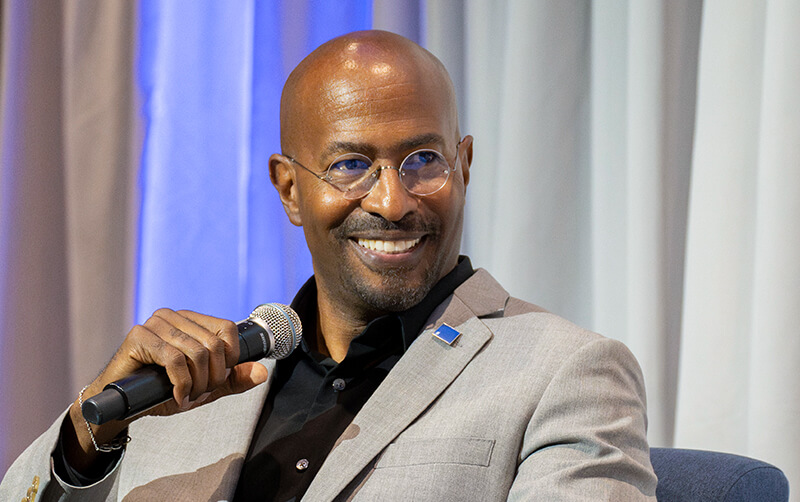
When he isn’t making headlines across the airwaves, the fact-checking truth-teller is establishing his legacy as an award-winning author and film producer, bringing his creative visions to life through visual and literary examinations of the American experience.
A Voice for the Time
Beyond his public persona, Jones is known for his empathy, resilience and unwavering dedication to justice. He is a visionary, whose work toward environmental, economic and socio-political advancement reflects values held by Noel, a true champion of civil rights.
In a nation ripped apart by political conflict, his efforts to bridge the divide through reconciliation and healing will undoubtedly inspire and empower the next generation of leaders.
Editor’s note: To learn more and register for the Rachel B. Noel Distinguished Visiting Professorship, visit www.msudenver.edu/noel-professorship.
