
“Hell’s Kitchen” Hits Every Note in Denver: A Review
Alicia Key’s Award-Winning Musical delivers a high-voltage coming-of-age story steeped in music, memory and survival
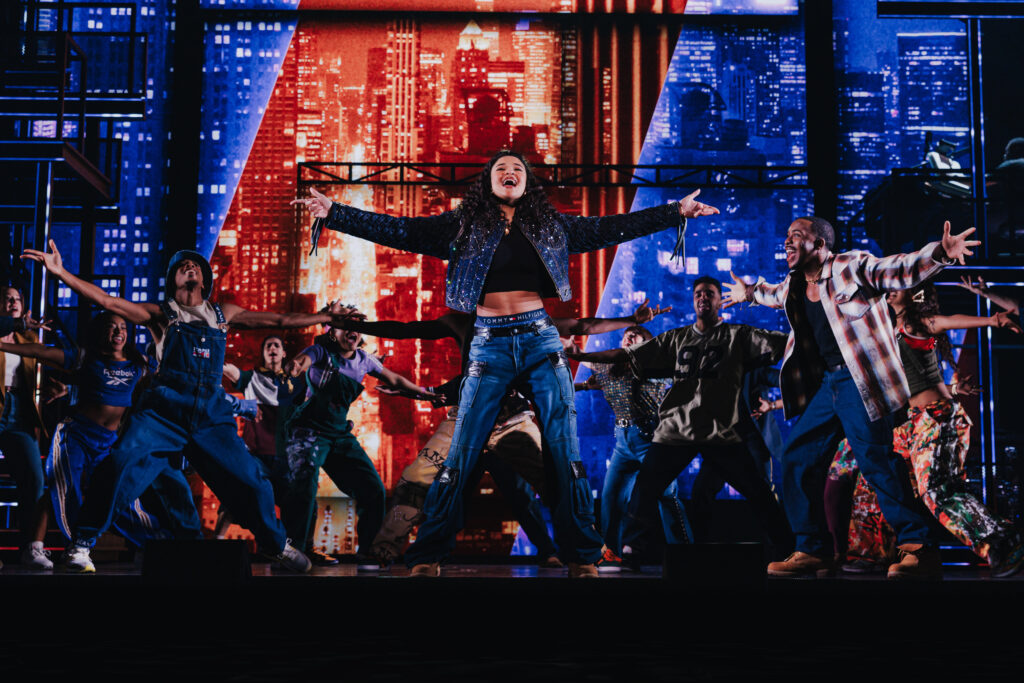
The national tour of “Hell’s Kitchen,” debuted in the Mile High City on Tuesday, April 14, delivering an immersive, high-energy experience at the Buell Theatre. For fans of Grammy Award-winning artist Alicia Keys, the production offers an emotionally-charged, music infused story that feels like a dream come true.
“Hell’s Kitchen” offers a vivid, nostalgic glimpse into Midtown Manhattan’s West Side neighborhood, with the cast and period-perfect costumes transporting the audience back to the 1990s. At the center of the story is Ali, a young dreamer navigating the city with curiosity and intensity, chasing a calling she can’t quite name. Her journey unfolds as a coming-of-age story shaped by ambition, struggle and love.

The acclaimed jukebox musical traces the life and career of one of R&B’s most accomplished singer-songwriters. Keys, a 17-time Grammy Award-winner whose accomplishments include 17 NAACP Image Awards, nine Billboard Music Awards and over 65 million records sold, has shared her passion for the production since it opened on Broadway in April 2024.
“If you told me as a little girl that one day there would be a musical on BROADWAY called Hell’s Kitchen that I created, wrote music for, and would stand as its lead producer… and that all I had to do was keep saying YES and keep doing the work… I would have never believed you,” she wrote on Instagram.

Just days after winning a Grammy for Best Musical Theater Album, she went on to say, “This has been one of the most outrageous and soul-fulfilling experiences of my life.”
Winning two Tony Awards – out of 13 total nominations including Best Musical and Best Choreography – “Hell’s Kitchen” stops short of being autobiographical. Instead, based loosely on Keys’ life with an accompanying book written by playwright Kristoffer Diaz, its narrative and an incredible cast of performers surface themes and emotional undercurrents that live behind each tune.
“The River”
“Hell’s Kitchen” got its name in the mid-19th century due to its notorious reputation as a rough place to live, with several alternative theories for the term’s true origin. Traditionally home to working-class Irish and Hispanic-American populations, the area has experienced periods of gentrification that have contributed to changing rents and infrastructure. Located adjacent to the Theater District, the neighborhood is home to multi-ethnic eateries, a notable LGBTQ population and a large community of actors.
Audiences experience Hell’s Kitchen through the eyes of 17-year old Ali, who explains her environment through the lens of constraint. During “The Elevator Prologue,” she shares the backstory behind her building – the 44-story Manhattan Plaza that provides affordable rent to artists.
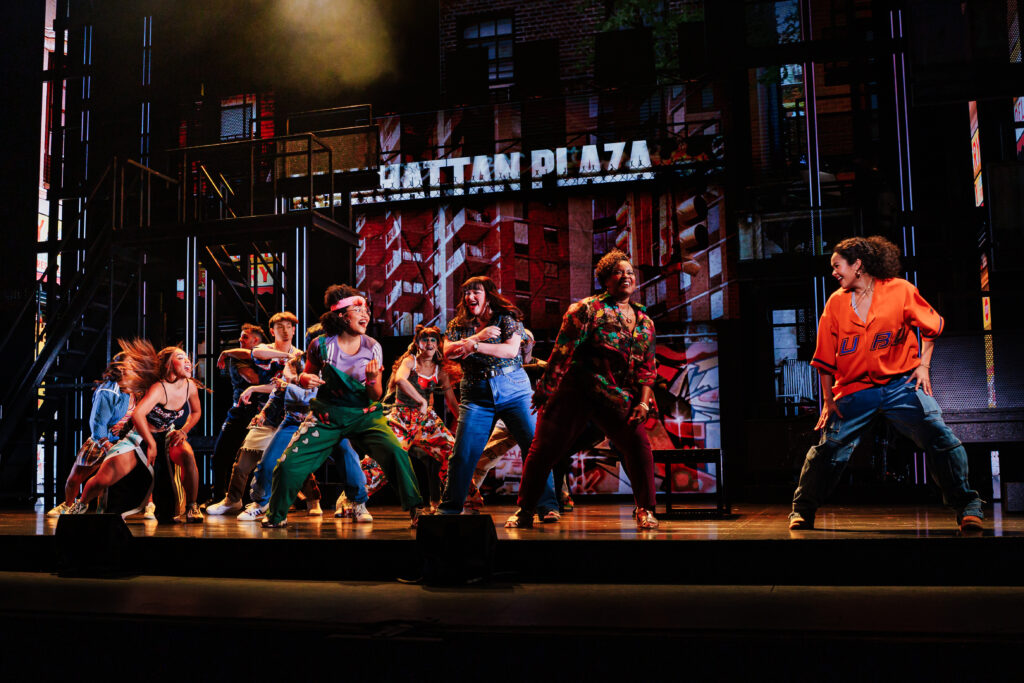
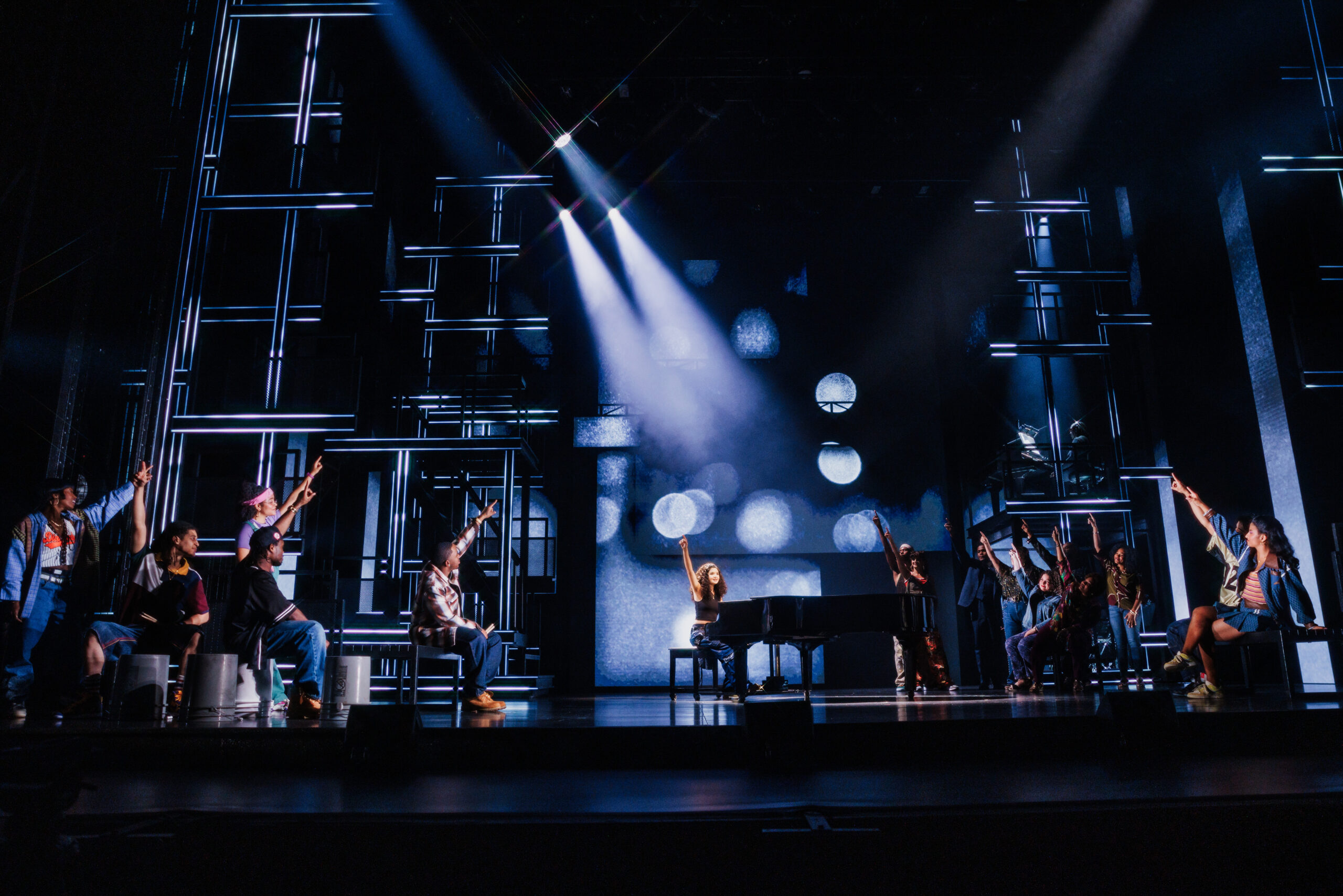
The imaginative production design carries audiences up through each floor, past the dance lessons and trumpets and into Ali’s 42nd floor apartment, where she lives with her mother, Jersey, and looks out longingly toward the Hudson River. With intentional lighting and musicians tucked behind towering iron structures, the set depicts both a cityscape and the feeling of being stuck in a world of music and mystery.
Ali, portrayed by the adorable Marley Soleil on opening night, feels trapped between her mother’s strict rules and the circumstances of her life in Hell’s Kitchen. She feels something tugging at her heart, but isn’t sure what it is. Like most adolescents, she begins to find meaning through her encounters with friends and fellow teens.
As she rides the elevator back to the bottom floor, the young protagonist introduces audiences to the Ellington Room, where the sound of a piano can always be heard.
“The Gospel”
The soundtrack of “Hell’s Kitchen” is astounding. In addition to some of Keys’ most celebrated music, the score features original songs like “Kaleidoscope” and “Seventeen.” The most memorable of its tunes, “The Gospel,” opens with a lovely piano ostinato and explodes into a full-cast tour de force.
After understanding Ali’s living conditions, “The Gospel” provides insights into her social life, with characters who play a role in her development and growing interest in the world around her.
The ensemble delivers a high-energy, tightly synchronized performance to move the show further into its storyline. Standouts Mae-Lynn Flores, Destini Hendricks, Sangeetha “Sang” Santhebennur, Christopher Miller, Usman Ali Mughal and Ethan Zundell drive the physical intensity, bringing technical precision and emotional charge to each number.
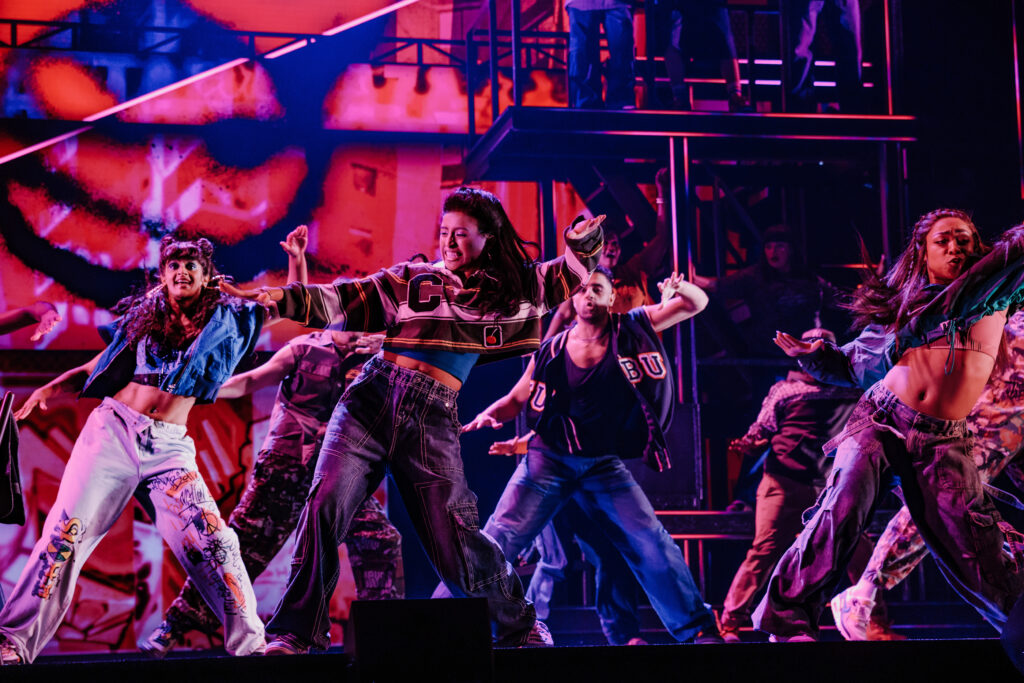
Realistic costuming brings the 90s back to life with designers like FUBU, Adidas and Tommy Hilfiger; Timberland boots; and shimmering high-impact pieces that pair the visual palette with the emotional tone and energy throughout the show.
Vocally, the production is equally formidable. Sydney Townsend and Gigi Lewis, as Ali’s closest friends, serve as confidants and narrative anchors whose performances add dimension to Ali’s internal world. Together, the three young women realize their affection for the opposite sex and provoke the initial dialogue between Ali and her crush, Knuck, played by JonAvery Worrell.
In “You Don’t Know My Name,” Ali’s interests erupt into a full-blown challenge to center Knuck’s affection in her life. This goal conflicts with her mother’s greatest desire to protect her from young love’s less favorable outcomes.
“Love Looks Better”
One of the production’s most complex themes is that of the relationship between mother and daughter. Jersey, played on opening night by Kelsee Kimmel, does her best to rein in her daughter’s imaginative and willful determination.
After a “Teenage Love Affair” with Ali’s father, Davis, played by Desmond Sean Ellington, Jersey was forced to grow up and give up on her own dreams of stardom. This doesn’t stop Kimmel from showcasing her immense talent and vocal range. She engages in playful sing-song banter with her friends and later brings the house down with “Pawn It All.” Her ultimate goal is to protect her daughter from making the same mistakes concerning young men.
With Ali caught up in being a “Girl On Fire,” nothing can stop her pursuit of Knuck – except herself.
“You Play These Notes”
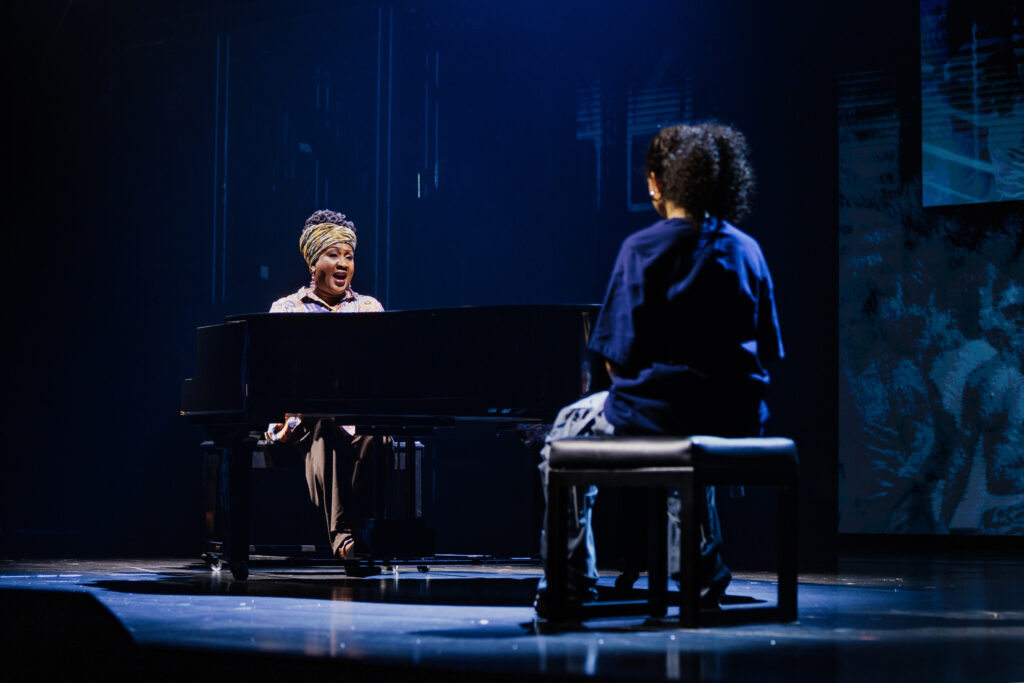
In the midst of finding herself, Ali accidentally discovers an alternative passion for piano. When she encounters the sage Miss Liza Jane, played by the indelible Roz White, her life takes a new direction.
Miss Liza Jane provides instruction and insights, helping Ali see the world in a more mature and responsible way. When Ali is upset, it’s the wisdom shared by the no-nonsense woman that brings her back to center. Once she realizes that she’s finally pinpointed the feeling of something calling out to her, it’s Ali’s own discipline and self-actualization that moves her forward.
Through a turbulent and eventful two hours, audiences navigate each of the relationships that have grown dear to the teenager’s heart.
The relationship between Ali and Knuck is intentionally underdeveloped and the audience recognizes what Ali does not: a significant age gap, an imbalance of emotional depth and a partner whose mental health remains ambiguous. The relationships between Ali and her mentor, her mother and her future blossom in a surprising, yet beautiful way.
The relationship between Ali and herself is a testament to the power of music and the enduring power of love.
“When It’s All Over”
Themes of systemic reality, identity, familial dynamics, mental health, resilience and belonging carry “Hell’s Kitchen” out of the theater and into the hearts of each patron long after the neon “HK” closes the show.
With confrontations rooted in generational tension and emotional inheritance coursing through the story, music becomes the glue that holds it all together. From the early boundless energy and belief in possibility to the devastation of loss, the arc takes shape: “Remember where dreams begin.”
Music doesn’t stop life’s challenges, but it can help bring comfort, elevate connections and inspire hope through the pain.
By the end, “Hell’s Kitchen” reveals itself as a story about learning to embrace complexity and finding joy through the journey to self-discovery. With its layered storytelling and exceptional performances across the board, it is a must-see in Denver and in cities throughout the U.S. as the production continues its national tour.
Editor’s note: “Hell’s Kitchen” will play through April 26. Tickets are available at denvercenter.org.
Age recommendation: Contains some strong language and mature themes.
