
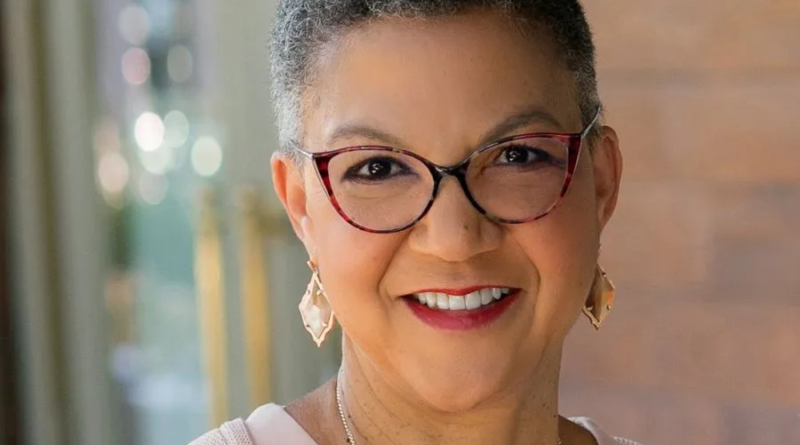
Lauren Y. Casteel Retires from the Women’s Foundation of Colorado
A Farewell to the Queen of Philanthropy
On a crisp, autumn evening in November, friends, members and supporters of Colorado’s philanthropic community gathered at the industrial, elegant setting of Ironworks Denver, speaking softly over the sweet, philharmonic sound of an electric violinist. Suddenly, the bright clinking reverberation of metal upon a crystal champagne glass rippled through the space, inviting guests to surround the esteemed honoree, for whom the affair was held.
The “Queen of Philanthropy” was wrapped in a warm embrace as those close to her shared stories of love, laughter and decades of profound impact. Their stories evoked an ocean of tears – some cried tears of joy as they recalled the litany of pleasant memories derived from earlier encounters; others cried tears of sadness as they listened to her impassioned farewell.
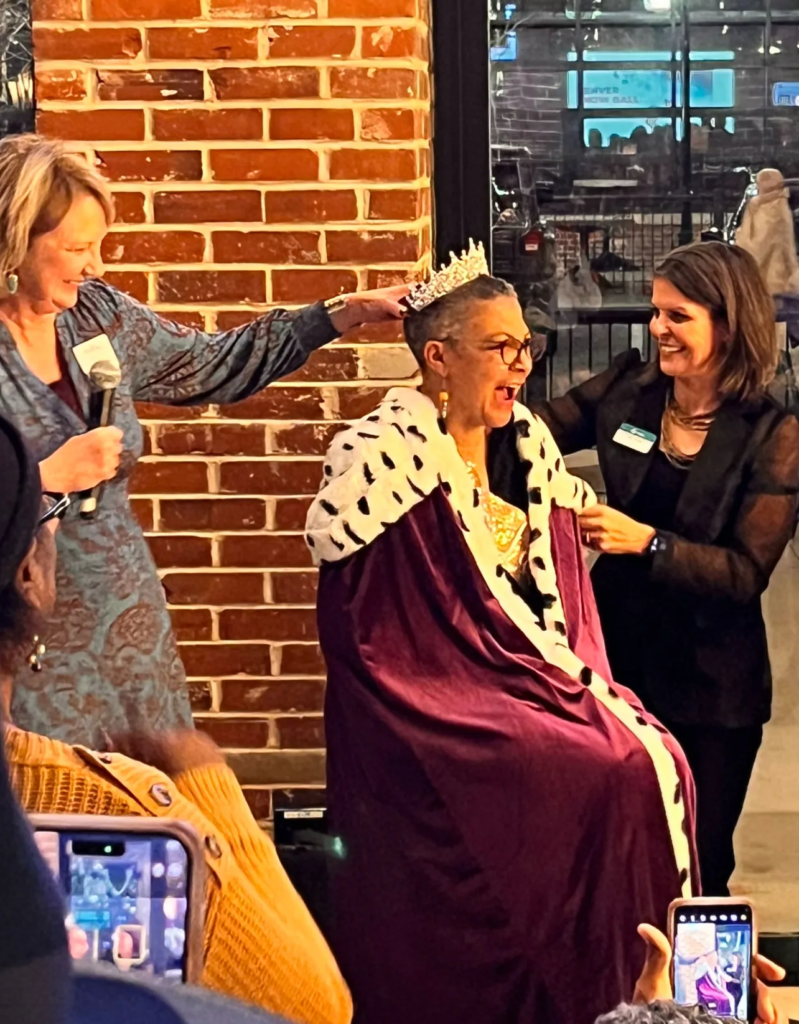
As she sat in the center of the room, draped in a luxurious velvet cape with a crown affixed to her head, Lauren Y. Casteel smiled a warm, familiar smile – the type that reached from the corners of her face up to her sparkling, tear-filled eyes. She looked out among the attendees, delivering words of gratitude. Then, triumphantly, she took a step from one journey into the next.
It was a retirement party for the ages.

The Birth of a Queen
Casteel is a special woman. She became the first person in Colorado to lead three foundations in 2015, when she took the helm at the Women’s Foundation of Colorado (WFCO). There, she has devoted nearly ten years to the deliberate and effectual creation of positive outcomes for women and families.
She spent her career advocating for equity while working to uplift people from all walks of life; a role, she says, that is derived from early exposure to the Civil Rights Movement and its leaders, including those who raised her.
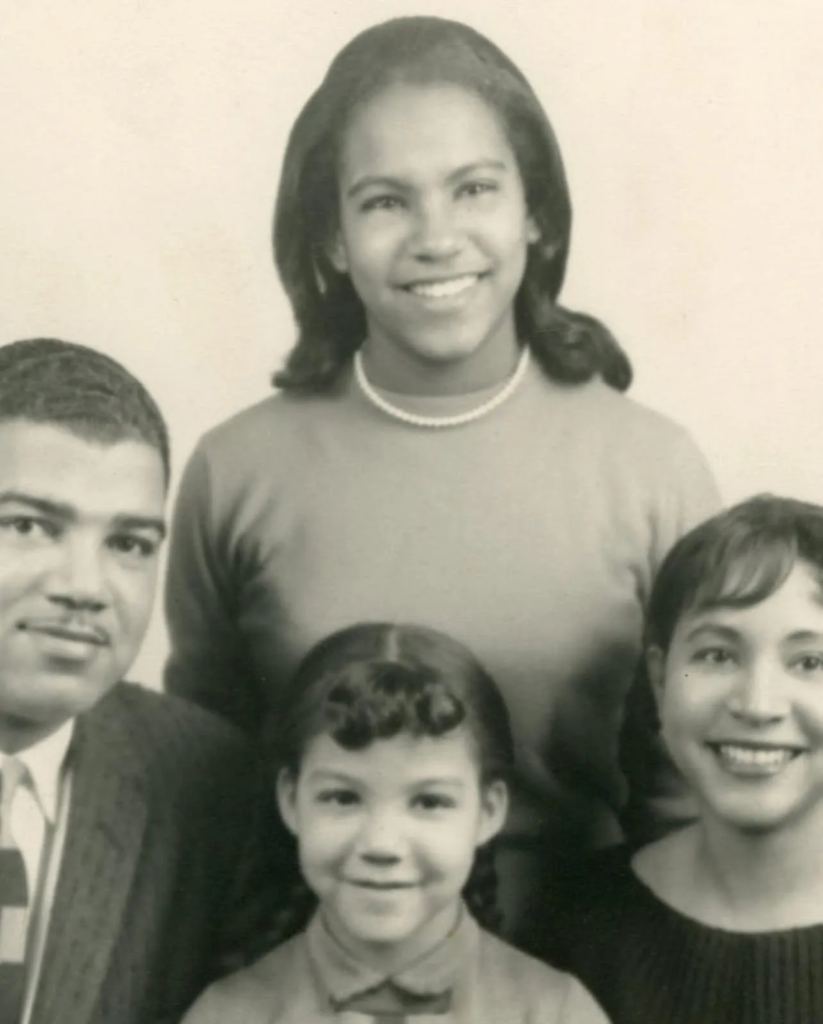
Born 1953 in Omaha, Nebraska, Casteel moved to Atlanta, Georgia, with her parents – mother, Margaret Buckner and father, Whitney M. Young – and her sister, when she was just three months old. In the racially-segregated, Jim Crow South, her father worked as the dean of social work at Atlanta University (now Clark University), and her mother taught at the historic women’s institution, Spelman College.
Atlanta provided the young Casteel with a foundational knowledge of the meaning of community.
“I had clear evidence of how we supported each other,” she recalls, mentioning her neighbor, Ms. Barrett, who brought her to school each day on her way to the bus until civil rights era boycotts forced her to travel on foot.
“Food was shared. Childcare was shared. Elder care was shared. Medical skills, home repair, gardening; you name it,” she continues. “Everybody helped each other.”
Sharing memories of her community, she mentions Julian Bond, who lived next door to her family and taught her the important childhood skill of shoe tying before becoming the first Black legislator in the Georgia House of Representatives.
“I was running down the sidewalk with my pigtails flying behind me, and he snatched me up and sat me down on the steps and said, ‘You’re not going anywhere! Do you know how to tie your shoes?”
That encounter, along with many other instances of shared resources within the close-knit community, made a lasting impact on Casteel. Throughout the early 1960s, she remembers boycotts at lunch counters and stores, colored water fountains and segregated restrooms. She watched the Civil Rights Movement emerge as racial tensions mounted all around her.
Early Experiences in Inequity
Thinking back to the earliest words she could read, “white” and “colored” were among the first.
Members of the community gathered at houses around the neighborhood, including hers, to conduct strategic meetings over spaghetti dinners. By the time the Civil Rights Movement reached a boiling point, her father received a fellowship from the Rockefeller Foundation at Harvard University, prompting the family’s relocation to Cambridge, Massachusetts.
Young eventually assumed a leadership role as the executive director of the National Urban League. “He became one of the ‘Big 6’ – so to speak – of the Civil Rights Movement,” says Casteel, noting that the list of well-known influential figures doesn’t acknowledge all the people who worked toward racial justice.
“Like Dr. King brought the faith community, my father brought education and the corporate sector. John Lewis brought youth. Dorothy Height brought women; Philip Randolph, labor. Roy Wilkinson, the NAACP and its legal defense fund. Everybody had a role,” she says.
Pointing to Rev. Dr. Martin Luther King Jr.’s iconic “I Have a Dream,” speech during the 1963 March on Washington for Jobs and Freedom, she credits community organizing and the often-forgotten diversity of the movement’s supporters as essential components of its success.
Rooted in a legacy of community engagement and a tremendous fight for social justice, her early experiences paved the way for her own extraordinary impact in Colorado.
Finding Her Way
Casteel’s work in the Centennial State has had significant positive effects on a global scale. Her bold, innovative approach to philanthropy has contributed to the modern framework of benevolence, with thousands of individuals benefiting from her stewardship.
Yet, when she arrived in Colorado in 1974, it was the strength of the community that nurtured her potential and lifted her into her rightful place at the throne of the philanthropic sector.
On Nov. 7, 2024, Casteel received a Lifetime Achievement Award from the Colorado chapter of the Association of Fundraising Professions. Upon receiving the prestigious honor, she looked out over the crowd and spoke eloquently about her journey, admitting, “Others often believed in me more than I believed in myself.”
At 16 years old, Casteel suffered a traumatic and violent assault while traveling in Eastern Europe. It left her feeling broken, but with the stigma surrounding mental healthcare at that time, her turmoil was never diagnosed as depression.
Six months later, Casteel lost her beloved father to a swimming accident in Lagos, Nigeria, preceded by the loss of her grandfather just two weeks earlier. Her closest friend was killed the following year.
“I literally just sort of slid off into a dark place,” she says, expressing gratitude that drugs and alcohol were not involved in her grief. “I would have just said that I was overwhelmingly sad.”
She had been attending Swarthmore College, but in the second semester of her junior year she was disenrolled as she struggled to cope with 18 months of devastating tragedy.
“The reality is that I was poised to lose my potential.”
A New Beginning on the Front Range
Ashamed of her perceived failure, she moved to Colorado at age 20 and began working odd jobs along the front range until her mother introduced her to a professor she knew at the University of Colorado Denver. She was encouraged to return to school, and found that her original field of study – English literature – was less fitting than communications, which represented human connection and “the ability to use one’s voice.”
Graduating with a degree in Communications, Casteel was convinced to apply for a job in media by a fellow student and founder of Colorado Woman magazine, Sharon Leventhal. With no experience in television, she was hired by Bev Martinez at Channel 2, who recognized her potential and instructed her to work hard. Eventually, she became one of the first Black female television personalities in the state.
Denver Mayor Frederico Peña hired her as the city’s first press secretary, where she implemented the enduring tradition of the mayoral “State of the City” address. As the first female senior communications advisor to a Denver mayor, she used the role as a vehicle to strengthen her self-confidence and live up to her potential as a trailblazing changemaker.
Leading with Love
Casteel was introduced to philanthropy by Swanee Hunt, founder of the Hunt Alternatives Fund, with assets over $8 million for women in children through women-run Colorado organizations. Hunt named Casteel executive director of the fund – propelling her into a philanthropic journey as the first Black woman to head a foundation in Colorado.
From 1990 to 1996, Casteel led the two-generation family foundation focused on advancing social justice. There, she engaged in efforts to build grassroots grantmaking and leadership.
She served as executive director of the Temple Hoyne Buell Foundation from 1996 to 1998, helping to transition the organization from investment in brick and mortar into supporting children, youth and families as an investment in Colorado’s future. Then, she moved to a senior staff position at the Denver Foundation (DF), under the leadership of David Miller.
Founded in 1925 to help future generations living in the Metro Denver area through inspiration, resource mobilization and the reduction of racial disparities, the foundation has raised $2.1 billion, while giving $1.6 billion in grants supporting Denver communities. Throughout 16 years as its vice president, Casteel instituted DF’s foundation’s Nonprofit Internship Program and the Nonprofit Inclusiveness Project, which received the Council on Foundations’ Critical Impact Award.
Having already made an immense impact through charitable giving before reaching WFCO, Casteel’s fully realized potential has created multigenerational changes for “women in rural communities, immigrant communities, LGBTQ communities; for women with disabilities, women who have experienced domestic violence, women who need support building economic security for their families,” and more.
She has overseen participatory grantmaking and conducted public policy reviews to ensure that the systems affecting women and girls living in Colorado are fair and beneficial. She has worked creatively, taking risks and strategically delivering programs and resources, such as the Denver Justice Center’s child care facilities and the Women and Girls of Color Fund and WINcome.
“We are constantly raising funds to help us support the community and to expand our capacity to share necessary resources,” she says. “But it’s also not just about money….Philanthropy has an obligation to not only write a check, but also, to be a full and active partner with the communities that we serve.”
For all her grace and magnificence, one of Casteel’s most fascinating attributes is her modesty.
Her genuine, charismatic demeanor radiates intrinsic beauty and a deep sense of knowing. She is intentional, purposeful and wise – a true leader, who elicits feelings of importance in each individual she greets.
Despite being inducted into the Colorado Women’s Hall of Fame in 2014, and being recognized for nearly thirty decades of philanthropic leadership with dozens of legacy and lifetime achievement awards, she waves off flattery and compliments, acknowledging the good in others and applauding those who helped guide her early footsteps.
Radical Rest
Upon announcing her retirement in July 2024, the philanthropic community extended warm and gracious words of appreciation for Casteel’s unwavering commitment to improving Colorado’s social landscape.
Noah Atencio, the chief executive officer of Philanthropy Colorado told Colorado Politics, “[She] has been a bold and unapologetic champion for equity, and has continually inspired Colorado’s philanthropic sector to meet the needs of historically marginalized members of our community. She has been at the forefront of using policy and grantmaking to change lives, communities and systems.”
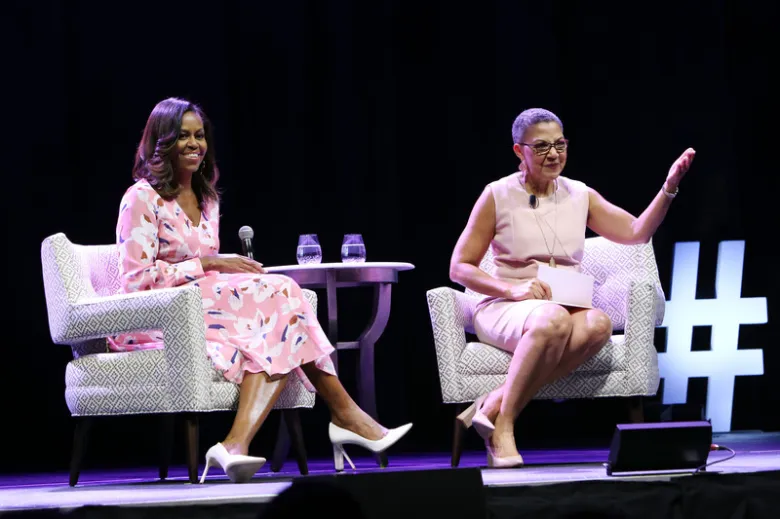
The gracious Queen of Philanthropy will remain on the Colorado Health Foundation’s Board of Directors, though she is excited for a well-deserved period of “radical rest,” set to begin in January.
“I need to slough off a lot of layers to get to who I am, and not just what I do,” she says, wisely.
She plans to travel, lounge around in her favorite articles of comfy clothing, soak up the literature she hasn’t had a chance to read in her years of dedicated service, and…rest.
“I want to walk in the park, and in the Botanic Gardens, and reconnect with nature,” she imagines. “I want to see what opens up.”
As devoted friends and colleagues raised their glasses to toast the charitable champion, it became clear that Casteel’s philanthropic legacy has truly made this world, and our state, a much better place. Though she will be missed, her example of pragmatic and purposeful leadership will endure for generations to come.
Editor’s note: Watch Ruby Jones’ interview with Lauren Y. Casteel HERE.
