
The Results are In: Colorado’s 2025 Coordinated Election
With a blue wave up and down the Front Range, Colorado voters reshape local power and bankroll Denver’s next decade of building.
Colorado’s November 2025 coordinated election delivered a decisive shift along the Front Range. Results include strengthened labor-aligned school boards in multiple districts, flipped control of Aurora’s City Council and a sweeping victory for Denver Mayor Mike Johnston’s $950 million “Vibrant Denver” bond package.
Statewide, voters approved a pair of school-meals tax measures and rejected efforts to roll back Denver’s flavored nicotine restrictions. Election results signaled an electorate that leaned left on education, health and public-works priorities.
Health & Capital Investments in the Capital City
Denver voters “said yes to, well, everything,” as Denverite’s live election blog put it.

All five parts of the Vibrant Denver bond – ballot questions 2A–2E – passed with broad support. Voters also supported a city measure to rename the Department of Excise and Licenses, and to stick with Denver’s ban on flavored nicotine products.
In 2024, Denver City Council voted to ban the sale of flavored tobacco products. Public health advocates fought long and hard for the legislation, arguing that the availability of fruity flavors appeals to minors. In hopes that the limited flavor availability will curb youth nicotine use, Denver residents voted to pass Referendum 310, with 71 percent in favor of the ban.
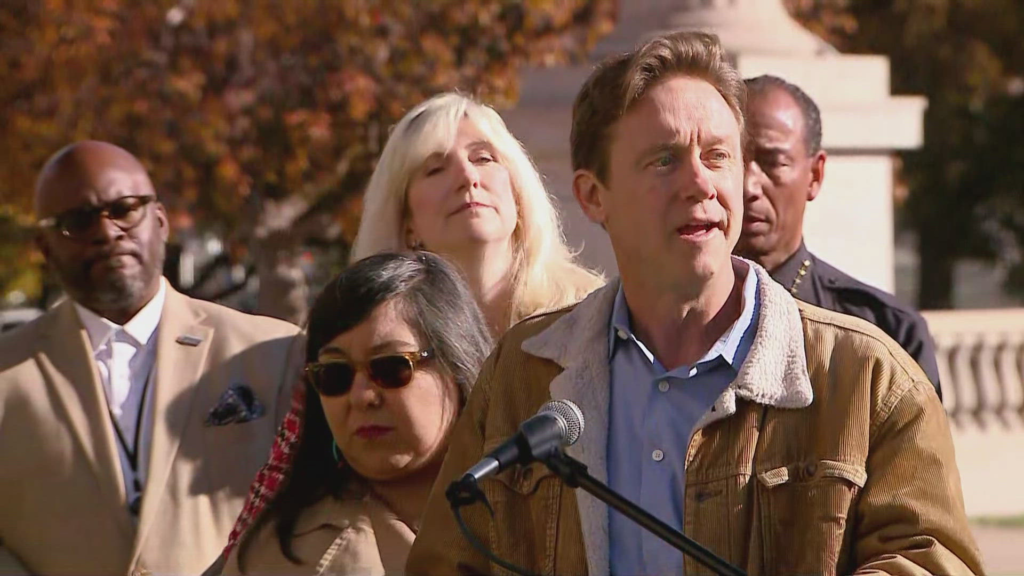
The Vibrant Denver Bond was another long-fought victory, with split sentiments regarding the timeliness and practicality of the bond. With layoffs and spending freezes throughout the year, many believed that the bond would eventually raise taxes and fund municipal projects that weren’t a high priority.
During months of candid media engagement, Johnston assured voters that the general obligation – or GO bond – wouldn’t raise taxes. He vowed that the package would create possibilities for the future, with support for infrastructure projects to meet the needs of a growing city.
In October, former Denver Mayor Wellington Webb shared his support for the bond package. He shared that continued municipal improvements would help Denver maintain its swagger, in an interview with Front Range Focus Publisher, Ruby Jones.
Johnston declared victory early Tuesday night, framing the bond as a down payment on civic infrastructure during a tough fiscal moment. “Tonight, Denverites voted in overwhelming favor for a vibrant Denver,” he said during an election night party at Après Govnr’s Park. He urged supporters to “enjoy tonight, because tomorrow we go back to work.”
A Win for the Future
Vibrant Denver is a five-part borrowing plan that will invest nearly $1 billion in parks and open space, cultural facilities, roads and bridges and public-safety training. Because it extends an existing mill levy, previously authorized by voters for paying back bonds, it doesn’t raise the city’s property tax rate. If it hadn’t been approved, the city would continue to use the existing mill levy to pay down current bonds faster.

Among the Vibrant Denver Bond’s flagship projects are a $70 million transformation of the former Park Hill Golf Course into Park Hill Park; roughly $140 million in road and viaduct work tied to the proposed Broncos stadium district at Burnham Yard; and a new training campus for first-responders.
The long-awaited Park Hill allocation clears the way for the first phase of construction on a 155-acre park in Northeast Park Hill. In 2023, voters rejected ballot measure 2O, which would have lifted a conservation easement created in 1997. In 2000, when the city took full ownership of the space, the original easement was extinguished, but use restrictions were incorporated into the new agreement.
After developers purchased the land in 2019 with plans for a mixed-use development, Denver voters opted to keep the green space. In early November, the city re-opened the park – which had been fenced off for months – for community use. The bond will provide seed funding for its design and early work, with residents already weighing in on preferences for layout and use.
The Cost of Change
Denver’s bridge and viaduct work near Burnham Yard align with the Denver Broncos’ revealed site plan.
Recently announced as a viable location for a new, state-of-the-art football stadium with a Super Bowl-friendly retractable roof, the Broncos are expected to transition to the new space as anticipated development changes the face of downtown.
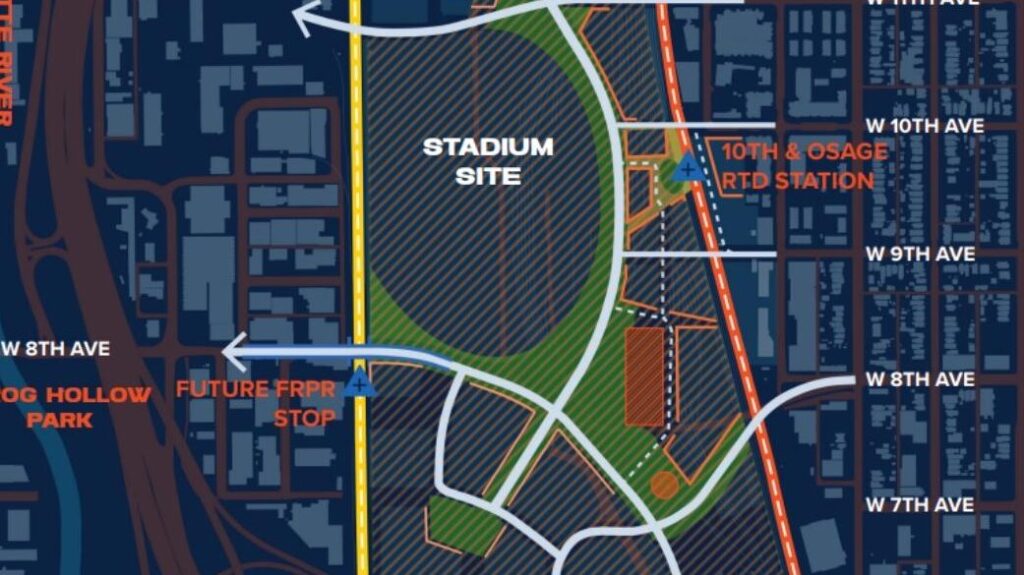
The team’s filing showed that it was “counting on” city investments contained in Vibrant Denver to modernize Sixth and Eighth Avenue connections and set up a road grid for a transit-oriented stadium district. Just days after the election, the team announced a partnership with architecture firm Sasaki, revealing preliminary sketches.
Nevertheless, the included viaducts were in desperate need of updates to accommodate increased traffic over the years.
Voters also approved Referred Question 2F, renaming the Department of Excise and Licenses to the Department of Licensing and Consumer Protection (DLCP).
Finally, the approval of Referred Question 2G changes how the two at-large seats on the Denver City Council are elected. Under the new system, the at-large positions are split into “Seat A” and “Seat B” and each seat will require a candidate to win a majority of the vote, with a runoff if no candidate reaches 50 percent.
A Progressive Surge in Aurora
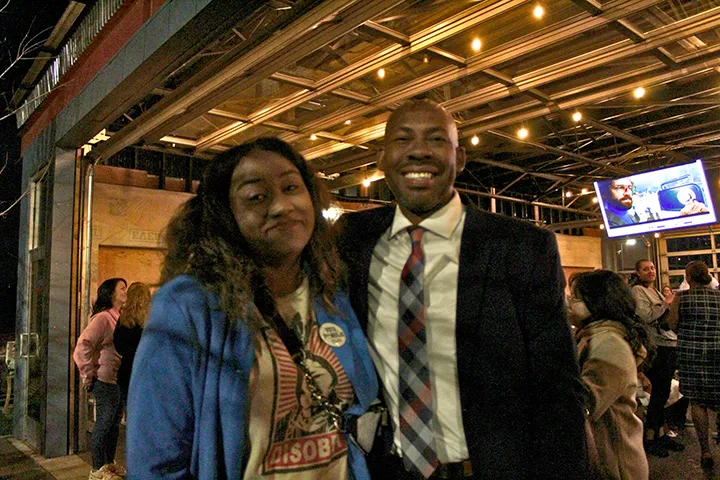
In Aurora, voters ousted high-profile conservative at-large incumbent Danielle Jurinsky, with progressive candidates Rob Andrews and Alli Jackson winning two at-large seats.
The sprawling suburban city also elected Gianina Horton, Amy Wiles, Ruben Medina. Ballot issues requiring gender-neutral language in amendments to the City Charter and the organization of a Downtown Development Authority also passed.
In the years to come, a progressive council with a 6-4 progressive majority will reframe debates on land use, policing oversight, immigration, code enforcement and homelessness policy.
Aurora Mayor Mike Coffmann has battled with both tenant advocates and property managers over code enforcement and safety at troubled complexes. He recently pitched a new homelessness strategy, and the progressive majority suggests the likelihood of increasing common ground on enforcement and habitability.
With collaboration and policy change at the heart of the election, votes represent a huge shift in one of Colorado’s largest and most diverse, yet politically divided, cities.
School Boards Along the Front Range
Across Metro Denver and the I-25 corridor, voters favored union-backed school board candidates in many districts, including Jefferson County, Cherry Creek, Poudre, St. Vrain, Brighton 27J, Summit and Steamboat.
For the most part, election results represent a broader rejection of culture-war framing such as book bans and gender ideology in school governance. Yet, conservative majorities held in several El Paso County districts, continuing the political split between urban/suburban and exurban areas.
- Jefferson County (Jeffco): Peter Gibbons and Tina Moeinian, backed by the Jefferson County Education Association, won seats in a district facing declining enrollment and a $60 million deficit. Newcomer Denine Echevarria also won, with debates centered on pay, safety after a high-profile shooting and budget transparency.
- Colorado Springs / El Paso County: In Colorado Springs School District 11Charles Johnson pulled ahead for the final spot on Thursday, with the overall board composition continuing to lean conservative.
- Boulder County: Local contests tracked the metro trend toward progressive governance, with county reporting centralizing official returns.
- Weld County and Northern Front Range: Outcomes varied by community with a mixed electorate along the north-metro corridor.
- Denver (Denver Public Schools): Union-endorsed candidates Amy Klein Molk (at-large), Xóchitl “Sochi” Gaytán (District 2), Donald “DJ” Torres (District 3) and Monica Hunter (District 4) led or won, keeping the board’s balance at 4-3 in favor of teacher-union endorsements.
The results of these elections suggest that voters – particularly in Denver metro suburbs – have grown weary after years of increased ideological clashes. Putting their hope in promises of stability, classroom support and budget stewardship, each candidate’s platform will immediately be challenged by declining enrollment, school closures and pressure on academic outcomes.
Statewide ballot measures
Colorado voters approved both Proposition LL and Proposition MM, two overlapping measures designed to sustain and expand free school meals for all students.
Approval of both measures signals strong public support for continuing universal meal access and innovative education policy. While both initiatives share the goal of ensuring every child receives nutritious meals regardless of income, they differ in funding sources and administrative details.
Proposition LL focuses on dedicating existing state revenues to maintain meal programs launched during the pandemic, allowing the state to utilize TABOR funds. Proposition MM creates a permanent funding stream through adjustments in tax credits for high-income earners over $300,000 per year, in addition to corporate deductions.
State officials and legislators will determine how to merge or sequence their provisions to avoid duplication and ensure a stable, equitable system for student nutrition.
Policy and Potential
Colorado’s election results show that voters along the Front Range are pragmatic about public investment, with confidence that municipal leaders will deliver results in a responsible way. They are banking on school boards to renew faith in statewide education, and looking to the future with hope.
With over 1.2 million ballots cast, the stage is set for legislative and administrative work to translate new mandates into action and move the state forward into a more progressive era.

