Denver Film Festival Concludes with Award-Winning films, Industry Honors and a Spotlight on Colorado Storytelling
The 49th annual festival recognized international filmmakers, celebrated Hollywood talent and elevated Colorado productions, concluding 11 days of cinema.
The 49th Denver Film Festival (DFF49) concluded Nov. 1 after 11 days of screenings, filmmaker discussions and industry recognition, with Colorado productions earning several of the festival’s top honors. From the opening-night presentation of “I Play Rocky” to the closing weekend’s celebration of international cinema and independent filmmaking, the festival brought established industry figures and emerging storytellers to venues across Denver.
Presented from Oct. 22 to Nov. 1, the festival showcased 130 films and welcomed filmmakers, actors and creative professionals from around the world. Its programming addressed subjects including immigration, environmental concerns, identity, family relationships and artistic expression, while offering audiences opportunities to engage directly with the people behind the productions.
The festival’s Audience Awards and juried selections provided a revealing conclusion to the program. “I Play Rocky,” director Peter Farrelly’s account of Sylvester Stallone’s struggle to bring his defining film to the screen, received the Audience Award for narrative feature. The documentary feature award went to “Good Help,” a locally produced film examining Denver residents’ response to the arrival of migrants. “The River,” a documentary exploring the Colorado River and the consequences of competing demands on its resources, received the True Grit Award.
These selections reflected the range of subjects that resonated with audiences and jurors, from a familiar Hollywood success story to contemporary issues affecting communities across Colorado.

Closing weekend honors established talent and emerging filmmakers
The festival’s final weekend featured appearances and recognition for several prominent performers, including John Leguizamo, Carrie Coon and D’Arcy Carden.
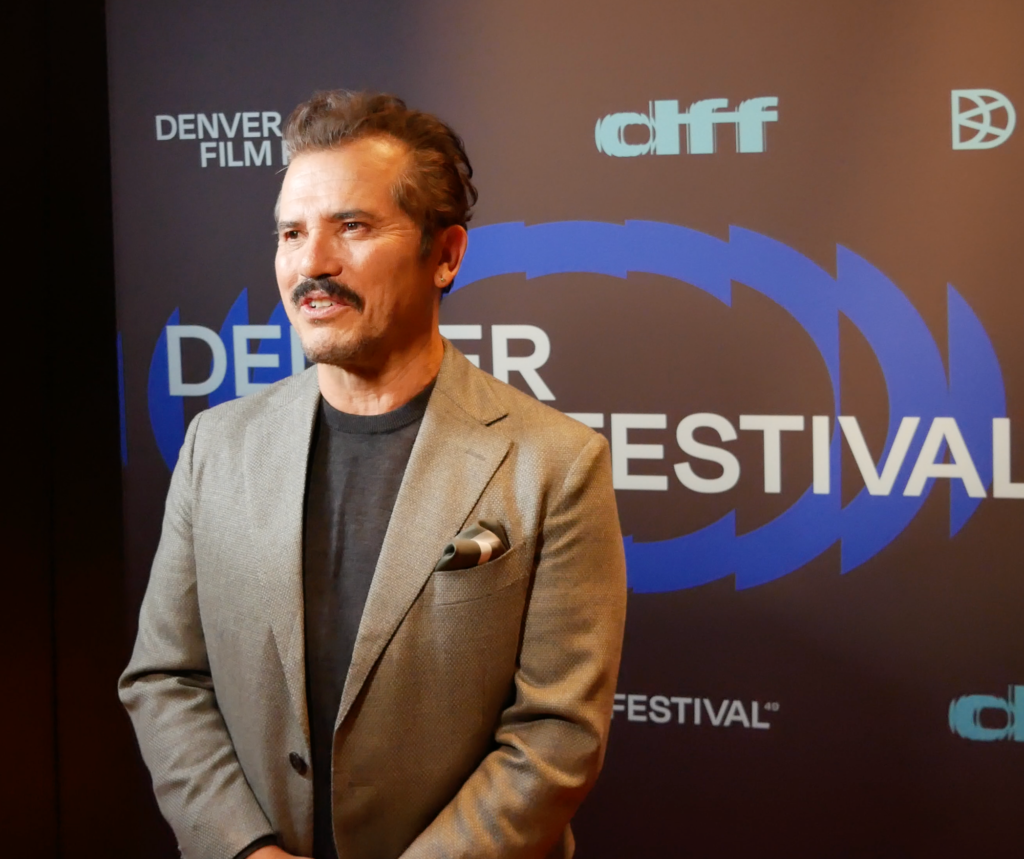
On Oct. 30, Leguizamo received the John Cassavetes Award during a special presentation of Christopher Nolan’s “The Odyssey” at the Denver Museum of Nature & Science. Established in 1989 with the support of actor Gena Rowlands, the award recognizes artists whose work reflects the independent and uncompromising spirit of filmmaker John Cassavetes.
Leguizamo’s career spans film, television and theatre, with performances in “Carlito’s Way,” “Romeo + Juliet,” “Summer of Sam” and “To Wong Foo, Thanks for Everything! Julie Newmar.” His recognition acknowledged decades of artistic versatility and contributions to screen performance.
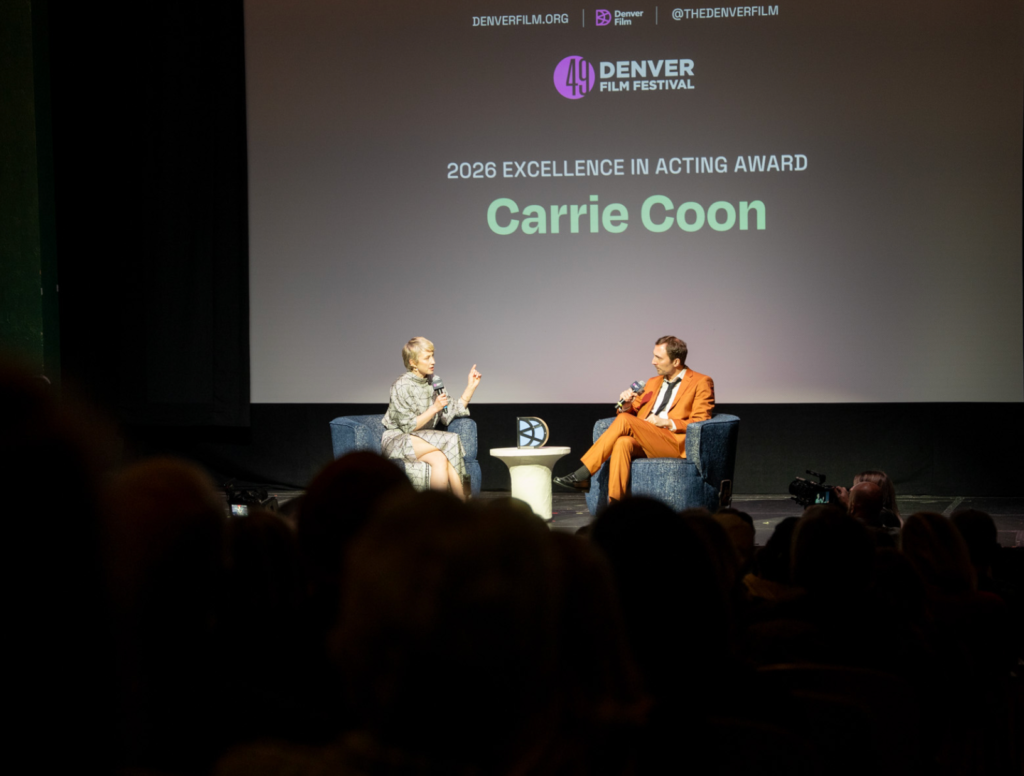
Coon received the Excellence in Acting Award for her performance in “The Liberation,” in which she portrays a woman who leaves her family to join a cult. Coon, whose work includes “The Leftovers,” “The Gilded Age” and “The White Lotus,” participated in a conversation following the film’s Oct. 30 presentation at MCA Denver at the Holiday Theater.
The following day, Denver Film recognized director Liz Sargent with its Breakthrough Director Award for “Take Me Home.” Co-presented with the Sundance Film Festival, the film stars Anna Sargent as a middle-aged Korean adoptee with a cognitive disability who cares for her aging parents while navigating questions of independence and family responsibility.
The recognition brought particular attention to a story in which disability, caregiving and autonomy are central to the narrative, subjects that remain comparatively underrepresented in mainstream film.
The festival’s closing-night selection, James Gray’s “Paper Tiger,” screened Oct. 31 at the Holiday Theater. Starring Adam Driver, Miles Teller and Scarlett Johansson, the thriller follows two brothers whose involvement in a seemingly promising scheme exposes them to increasingly dangerous circumstances.
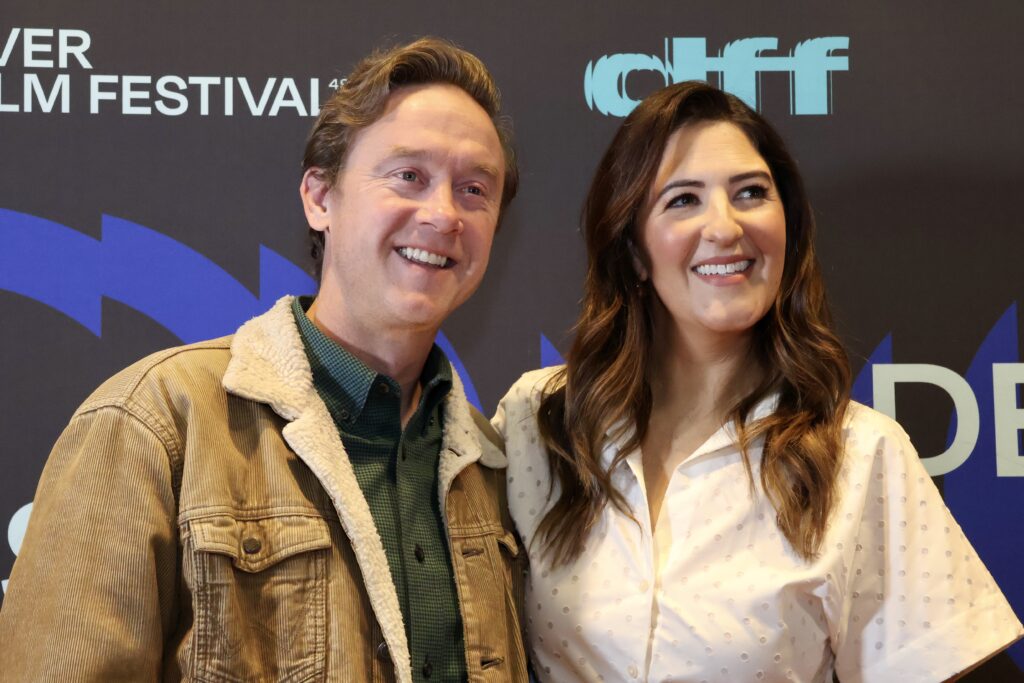
The final day culminated in an awards brunch at the Halcyon Hotel, where Emmy-nominated actor Carden received the Women+Film Barbara Bridges Inspiration Award. Recognized for her work in “The Good Place,” “Barry” and “A League of Their Own,” Carden joined the festival’s distinguished honorees as jurors announced the year’s competitive awards. The ceremony also brought together festival leadership, filmmakers and representatives of Colorado’s film industry.
Festival Awards Recognize International Excellence and Colorado Talent
The 2026 awards represented a wide range of filmmaking approaches, including narrative features, documentary productions, experimental cinema and short films. Audience Awards were determined through ballots submitted by screening attendees, while juried awards were selected by panels of film industry professionals.
Among the festival’s major award recipients were:
Audience Awards
- Narrative Feature: “I Play Rocky,” directed by Peter Farrelly.
- Documentary Feature: “Good Help,” directed by Rebekah Henderson and Lilah Park.
- Short Film: “We Were Here,” directed by Pranav Bhasin.
Juried Awards
- Krzysztof Kieslowski Award for Best Feature Film: “La Bola Negra,” directed by Javier Ambrossi and Javier Calvo.
- Maysles Brothers Award for Best Documentary: “Whispers in May,” by Dongnan Chen and collaborators.
- True Grit Award: “The River,” directed by Mara Tasker.
- Grand Jury Award for Best Short Film: “Hyena,” directed by Altay Ulan Yang.
- True Grit Short Film Award: “End of Things,” directed by Bruce Tetsuya.
- Marilyn Marsh Saint-Veltri Award for Best Student Animation Short: “Hunting,” directed by Lea Favre.
Additional recognition included a special award for Sophie Okonedo’s performance in “Clarissa,” an Emerging Storyteller mention for Isabella Grace Cohn’s “Watch You Rise,” an Artistic Vision mention for Erin Espelie’s “Ideas of Order” and a special mention for Brendan Young’s documentary short “The Meloneers.”
The festival also presented its Rare Pearl Award to “Brian,” directed by Will Ropp, and awarded Music on Film-Film on Music documentary grants to “Asha Puthli: Taking Space” and “Holding on to Water,” supporting the use of music in documentary production.
Colorado Stories Earn Recognition Beyond the Screen
The recognition of Colorado filmmakers was among the most consequential developments of this year’s festival, particularly given the subject matter and geographic relevance of the winning productions.
“Good Help,” directed by Rebekah Henderson and Lilah Park, documents the work of Denver residents who organized assistance for migrants arriving in the city during a period of intense public debate. Its Audience Award for documentary feature indicates that the film connected with viewers while examining an issue often discussed primarily through government policy, financial pressures and political disagreement.
The documentary examines the actions of community members and the relationships that developed as residents navigated an unfamiliar humanitarian challenge. Its recognition demonstrates the potential for local documentary work to contribute to broader conversations about immigration, civic responsibility and the experiences of people directly affected by public decisions.
Mara Tasker’s “The River” received the True Grit Award, which recognizes distinctive Colorado voices and storytelling. The documentary examines the Colorado River and the complex environmental, economic and political questions surrounding its future.
In their award statement, jurors described the film as timely and urgent, citing its depiction of Colorado’s natural environment and the potential consequences of failing to address threats to its preservation.
Bruce Tetsuya’s “End of Things” also received the True Grit Short Film Award, with jurors recognizing its visual storytelling and exploration of existential fear, resilience and hope. The award continued a significant run for the Denver filmmaker, whose work has appeared in nine consecutive editions of the festival.
Other Colorado-related selections, including “Watch You Rise” and “The Meloneers,” earned special mentions, further demonstrating the range of stories emerging from the state’s filmmaking community.
The festival’s Oct. 29 Colorado Filmmaker Party provided an opportunity for local creatives, industry professionals and audiences to build relationships outside the screening room. These connections created an important opportunity for independent filmmakers seeking collaborators, distribution opportunities and access to resources needed to develop future productions.
International Cinema Expands the Conversation
The festival’s competitive selections also drew attention to filmmaking beyond the United States. The Krzysztof Kieslowski Award for Best Feature Film went to “La Bola Negra,” a Spanish-French production directed by Javier Ambrossi and Javier Calvo. Jurors recognized its exploration of love and fear through an expansive historical narrative.
“Whispers in May,” an international documentary collaboration led by Dongnan Chen, received the Maysles Brothers Award for Best Documentary. The film explores female friendship during adolescence through an approach that challenges traditional assumptions about documentary authorship and representation.
The Grand Jury Award for Best Short Film went to “Hyena,” directed by Altay Ulan Yang, with jurors recognizing its black-and-white cinematography and portrayal of mob violence at a Chinese art school.
Collectively, the selections demonstrate the diversity of cinematic approaches represented in Denver, from intimate documentary portraits to historical narratives and experimental short-form work.
For audiences, the range of international programming offered access to cultural perspectives and filmmaking traditions that are not consistently available through conventional theatrical distribution.
Denver Film Festival Artistic Director Matthew Campbell acknowledged the importance of both international and regional storytelling in announcing the awards.
“This year’s Denver Film Festival celebrated the best of world cinema, as well as the best from our own backyard,” Campbell said.
He also emphasized the capacity of film to challenge audiences, encourage self-recognition and illuminate shared human experiences.
Colorado Prepares for Sundance’s Arrival
With DFF49 now concluded, attention now turns to a significant development for Colorado’s film industry: the Sundance Film Festival’s move to Boulder.
The 2027 Sundance Film Festival will take place Jan. 21 to 31, marking the internationally recognized festival’s first edition in Colorado after decades in Utah. Organized by the Sundance Institute, the festival has played an influential role in introducing independent filmmakers and productions to audiences, distributors and industry professionals.
Its arrival brings new opportunities for Colorado’s creative community, including increased exposure to international film professionals, expanded access to independent cinema and potential economic activity associated with film production and cultural tourism.
The transition is directly connected to this year’s Denver Film Festival, with Sundance co-presenting “Take Me Home,” offering an early example of how the two festivals can contribute to the state’s expanding film landscape.
Half a Century of Cinema
As Denver Film looks ahead to its 50th anniversary, the success of this year’s festival offers plenty to celebrate and even more to build upon. Its enduring value lies in bringing exceptional films to Colorado audiences while creating opportunities for emerging filmmakers and expanding the reach of independent cinema.
With Colorado productions earning significant recognition alongside international talent, the festival closes another successful year with a clear sense of its impact and the possibilities ahead.
Editor’s note: To learn more about Denver Film’s programming, visit denverfilm.org.
