
“Shared History” Centers Women in Colorado’s Story
A new permanent mural at the Center for Colorado Women’s History uses archival images and historical storytelling to broaden the picture of who shaped the state.
A sweeping new mural at the Center for Colorado Women’s History (CCWH) is asking visitors to reconsider what, and who, belongs at the center of Colorado’s historical record.
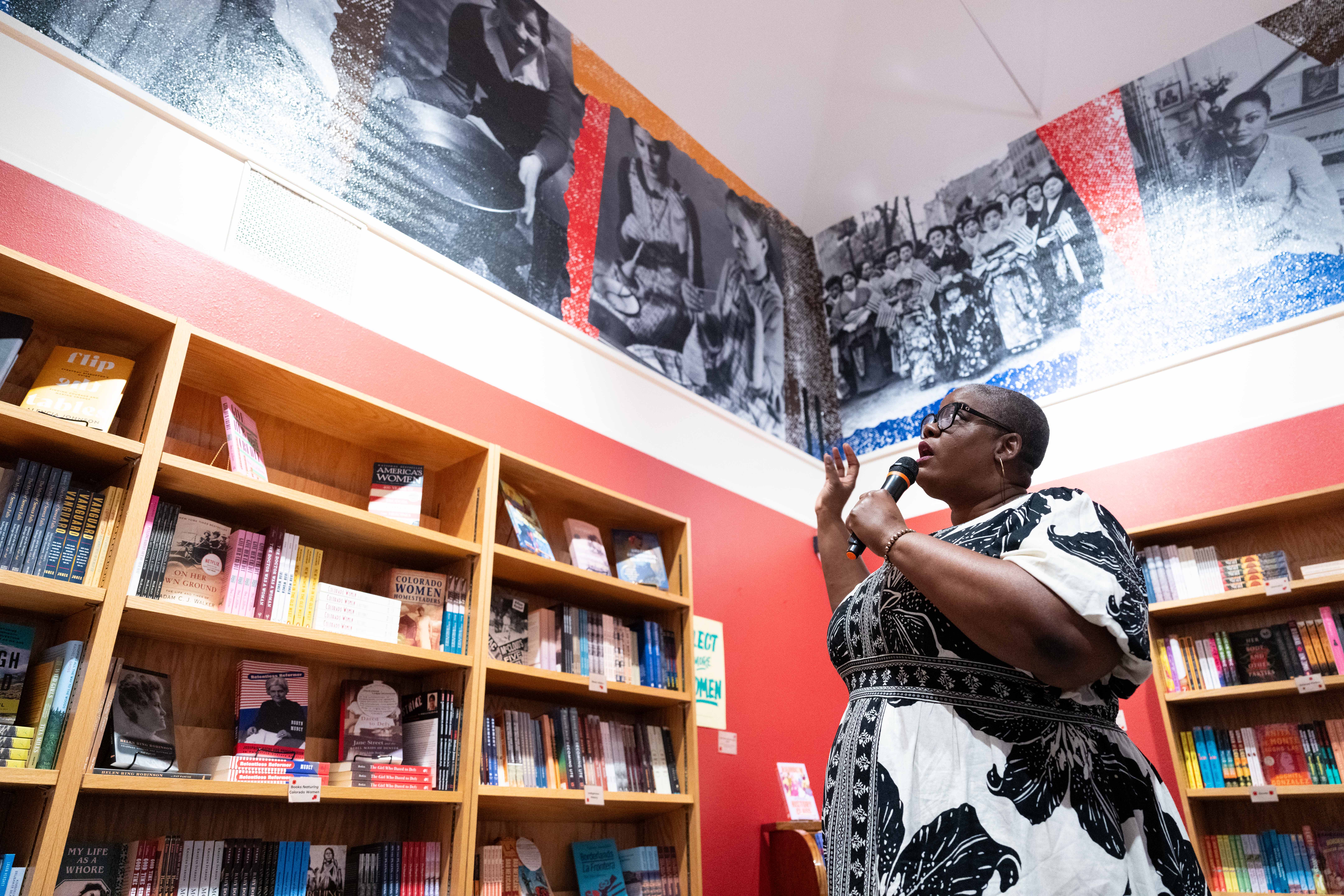
“Shared History,” a 5-foot-by-49-foot mural created by artist and historian Chloé Duplessis of Duplessis Art, was installed July 28 at the Denver museum. Drawing from historic photographs, maps and archival materials in the History Colorado collection, the permanent installation brings together images of women across generations, professions, identities and cultural backgrounds.
The mural commemorates both women whose names are familiar and those whose contributions were never formally documented, placing labor, leadership, creativity and care alongside more traditional markers of historical significance.
“By elevating images of women whose contributions have been overlooked, minimized or separated from the story of Colorado, the mural creates space for a fuller and more authentic historical narrative,” Duplessis says.

That broader view is built into the scale and placement of the work. Stretching nearly 50 feet across the entrance to the CCWH, “Shared History” becomes one of the first things visitors encounter.
“The ‘Shared History’ mural in the entrance to the Center for Colorado Women’s History immediately shapes the experience and expectation of guests to the museum,” museum director Susan Fries says. “Guests can focus on the contributions of women from across the state and recognize their experiences in the unnamed women who are represented in the historic photos of the mural.”
Expanding the historical frame
Women have always been part of Colorado’s political, economic, cultural and community development, even when the historical record has not given equal attention to their work.
“Shared History” uses visual storytelling to address gaps in the historical record, placing women within the story of how the state was shaped, sustained and carried forward across generations.
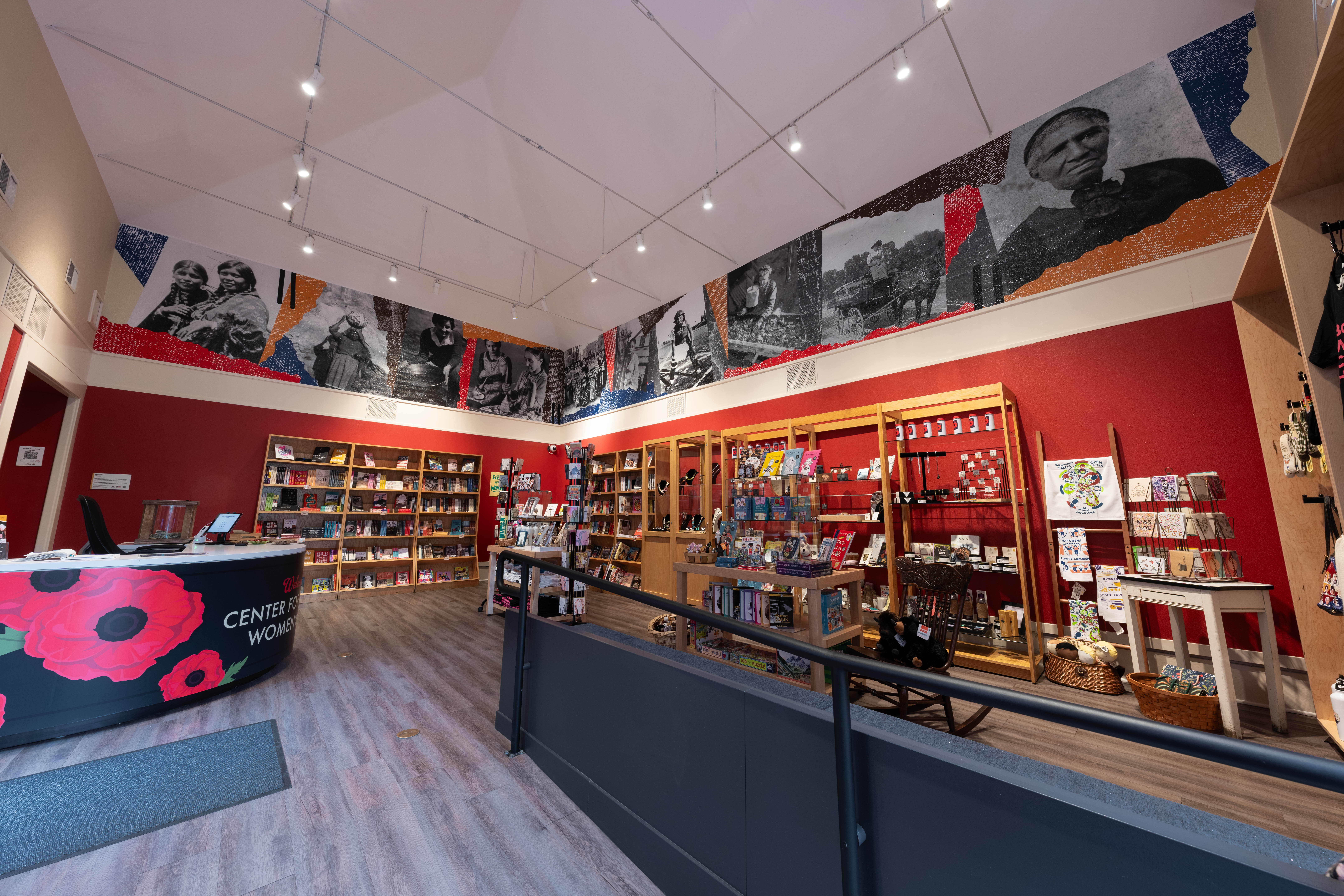
The images include mothers, sisters, daughters, friends and leaders, deliberately reaching beyond formal titles or public recognition. It acknowledges both visible accomplishments and the less documented labor that has supported families, institutions and communities over generations.
That approach leaves room for visitors to explore connections organically when a subject is not recognizable by name alone. Historical photographs of unnamed women become part of the story instead of at the margins of Colorado history,
For Duplessis, that is a central component of the work. The mural is designed to encourage visitors to locate themselves within a collective history that remains unfinished.
A permanent work marking two anniversaries
The mural was installed as Colorado marks the 150th anniversary of statehood and the United States approaches the 250th anniversary of the Declaration of Independence in 2026.
Its creation reflects an overarching question accompanying such commemorations: whose experiences are included when communities tell the story of a state or a nation?
By drawing from archival materials while deliberately expanding the visual representation of women, “Shared History” uses the anniversary as an opportunity to revisit the historical record, adding depth and context to the celebration..
The mural project was produced in collaboration with Athena Project, a Colorado nonprofit focused on increasing opportunities and visibility for women and underrepresented genders in the arts. Since 2012, the organization has supported artists through paid opportunities, professional development, partnerships and audience engagement.
Funding for the mural was provided in part by Denver Arts & Venues through the Denver CREATES Fund and the National Endowment for the Arts.
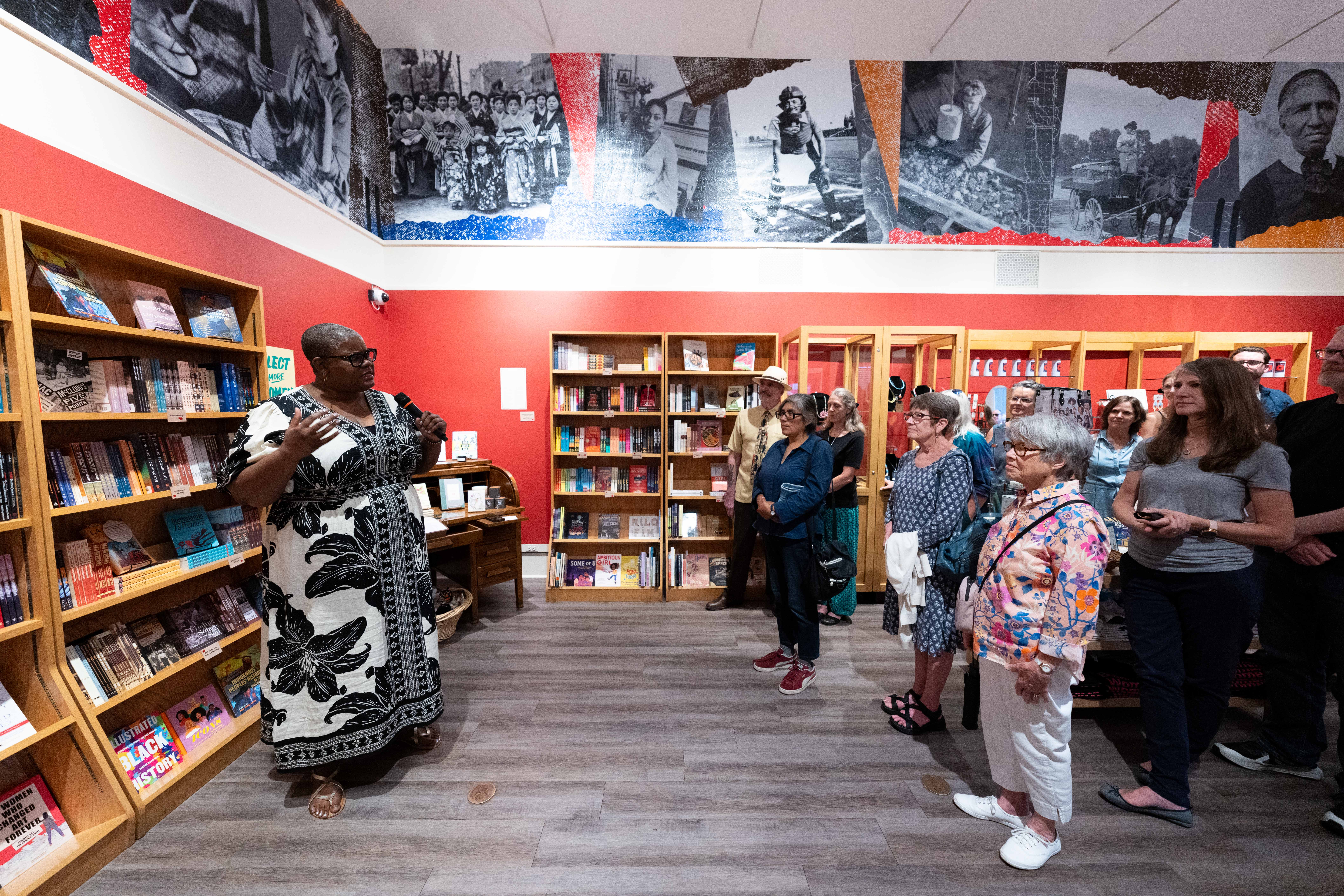
The July 28 installation was marked with an opening reception and artist talks by Duplessis at CCWH. The mural now remains on permanent display and can be viewed for free during the museum’s public open hours.
For visitors, its presence offers a new perspective of Colorado history, including the history of women whose work, relationships, decisions and contributions helped shape the state, whether or not their names made it into the traditional record.
Editor’s note: To learn more about the Center for Colorado Women’s History, visit http://www.historycolorado.org/center-colorado-womens-history.