
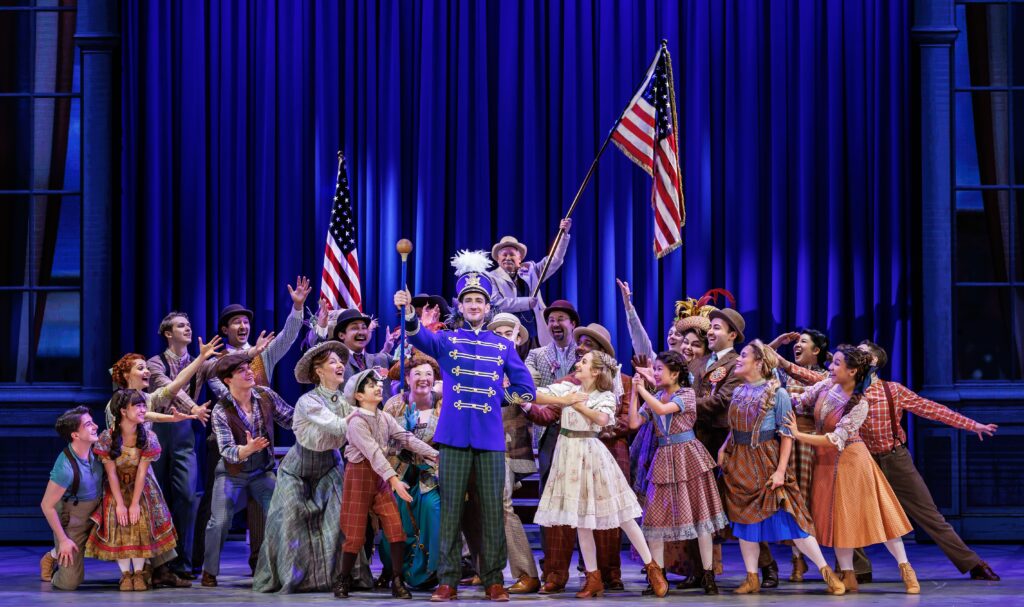
The Music Man Marches into Denver with Charm, Precision and Timeless Appeal – A Review
The national Broadway tour of “The Music Man” opened to an enthusiastic audience in Denver last night, bringing Meredith Willson’s beloved American musical to life with vigor, polish and heart. The production will run through March 1 at the Denver Performing Arts Complex, offering theatergoers a limited opportunity to experience one of the most beloved classic musicals in American history.
An Award-Winning Legacy
Originally premiering on Broadway in 1957, “The Music Man,” written and composed by Meredith Wilson, established itself as a landmark of mid-20th century musical theater. The original Broadway production won five Tony Awards, including Best Musical; Best Actor in a Musical for lead actor Robert Preston; and Best Featured Actress in a Musical for lead actress Barbara Cook.
The musical’s success paved the way for the 1962 film adaptation, directed by Morton DaCosta and starring Preston alongside Shirley Jones. The film earned six Academy Award nominations and won the Oscar for Best Original Music Score, cementing its place in cinematic history.
For audiences who grew up watching the story unfold in the theater or on the silver screen, the live staging carries a powerful sense of nostalgia. The current Broadway touring production offers a familiar story, with modern animation updates that add visual movement and dimension without compromising the classic charm.

A Story That Still Strikes a Chord
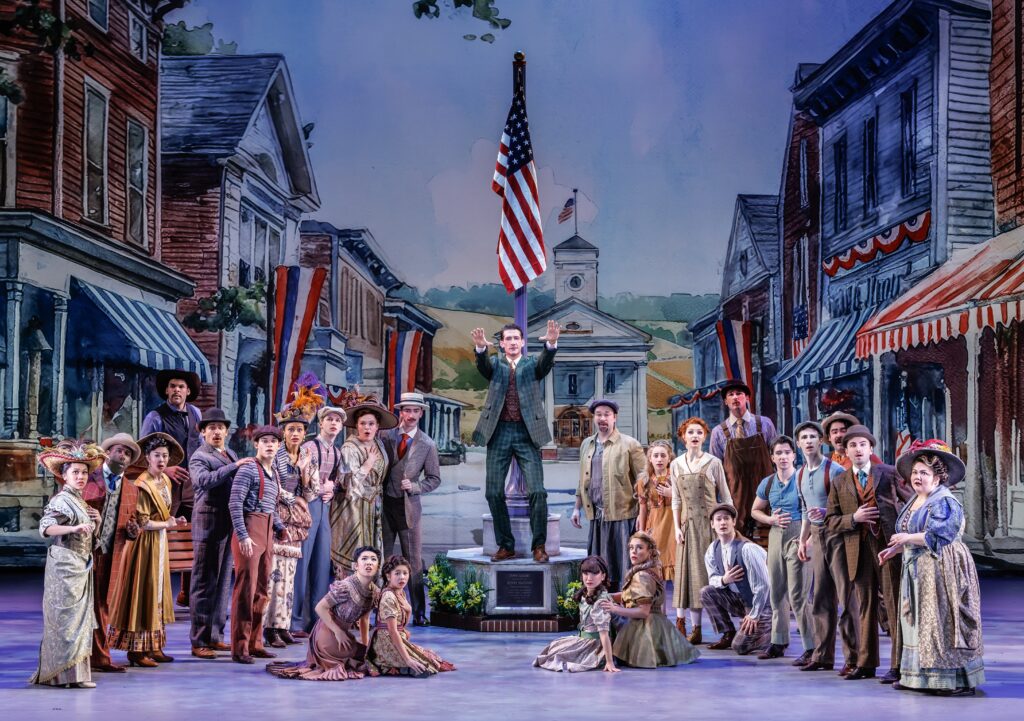
Set in a fictional midwest town in the summer of 1912, the story follows salesman Professor Harold Hill, who brings his slick-talking schemes to River City, Iowa. Played by Elliott Andrews, Hill convinces the townsfolk to purchase band instruments and uniforms for a boys’ band that he promises to lead despite not having any experience of being able to “tell one note from another.”
His carefully constructed deception begins to unravel when he meets Marian Paroo, the town’s perceptive librarian and piano teacher, brought to life by Elizabeth D’Aiuto.
What unfolds is a classic American tale of transformation. A con man discovers authenticity and a community rediscovers the spirit of collectivity. Themes include belief in oneself, the idea of shared possibility and the strength of unity; and they feel just as resonant today as they did nearly seven decades ago.
Mile-High Vocals and Standout Performances
From the opening number, “Rock Island,” the ensemble demonstrates technical precision and rhythmic control. A group of traveling salesmen exchange quips to the beat of a percussive rhythm of a moving train. The quick-witted nature of their discourse defines the show; their sustained projection and notable breath control are an especially impressive accomplishment in Denver’s mile-high altitude, where thinner air challenges even seasoned performers.
The lead actors anchor the production with commanding vocal performances and nuanced character work. Hill balances boldness with vulnerability, while Paroo offers poise and emotional clarity. Though both can carry a note, Paroo’s vocal range is outstanding. Their duets resonate with warmth; and as the story unfolds, their chemistry drives the narrative’s evolution.
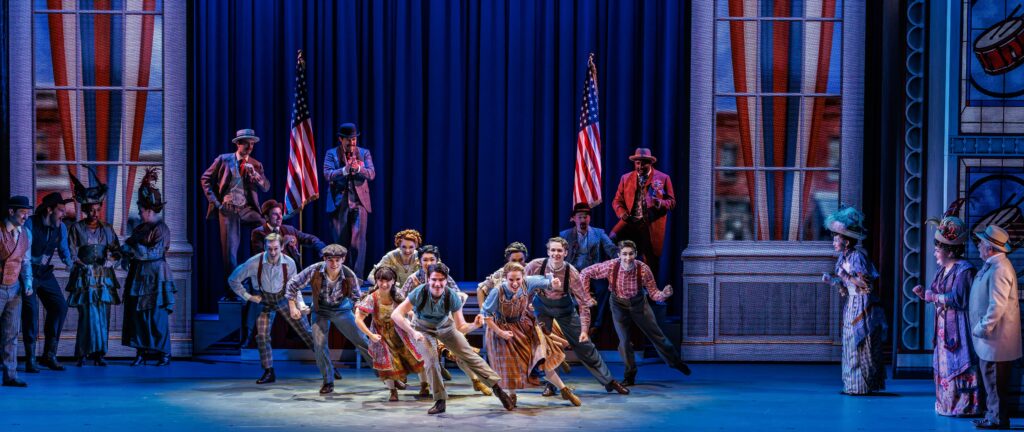
Paul Urriola stands out for his comedic charisma as Marcellus Washburn, delivering a quirky New York accent and moments of levity that spark genuine audience laughter. His timing and physical expressiveness add playfulness to the production without overwhelming its heart.
Young Winthrop Paroo, played by Dylan Patterson, delivered a strong and courageous rendition of “Gary Indiana,” – encouraged by Hill’s bravado and camaraderie.
Comedy, Harmony and Lively Supporting Roles
Beyond the leads, the supporting cast strengthens the world of River City with texture and charm. Marian’s mother, Mrs. Paroo, provides grounding warmth and subtle comedic timing, enriching the scenes with authenticity. Played by Savannah Stevenson, the expression of a mother’s love and concern is realistic, while her thick Irish accent and admiration of Hill add depth to her daughter’s budding affair.
The mayor’s wife, Eulalie Mackecknie Shinn, is played by Emmanuelle Zeesman, who brings spirited energy to civic gatherings, elevating town meetings with expressive delivery.
The barbershop quartet functions as both musical backbone and a comedic thread throughout the show, and the town’s group of gossiping ladies does a fabulous job of “Pick-a-Little, Talk-a-Little.” Their harmonies are crisp and balanced, evoking classic Americana while propelling the story forward.
Each supporting performance reinforces the sense that River City is a living, breathing community rather than a simple stage setting.
Scenic Design That Brings River City to Life
“The Music Man’s” scenic and technical design is remarkable. The set convincingly captures the essence of an early 20th-century Midwestern town, with architectural facades and layered staging that create depth and dimension. The town square grounds the narrative in a visually cohesive world.
Integrated screens make each transition feel dynamic and captivating. The shifting imagery adds contemporary layer to the classic staging, and shadowed movement creates depth, anticipation and excitement.
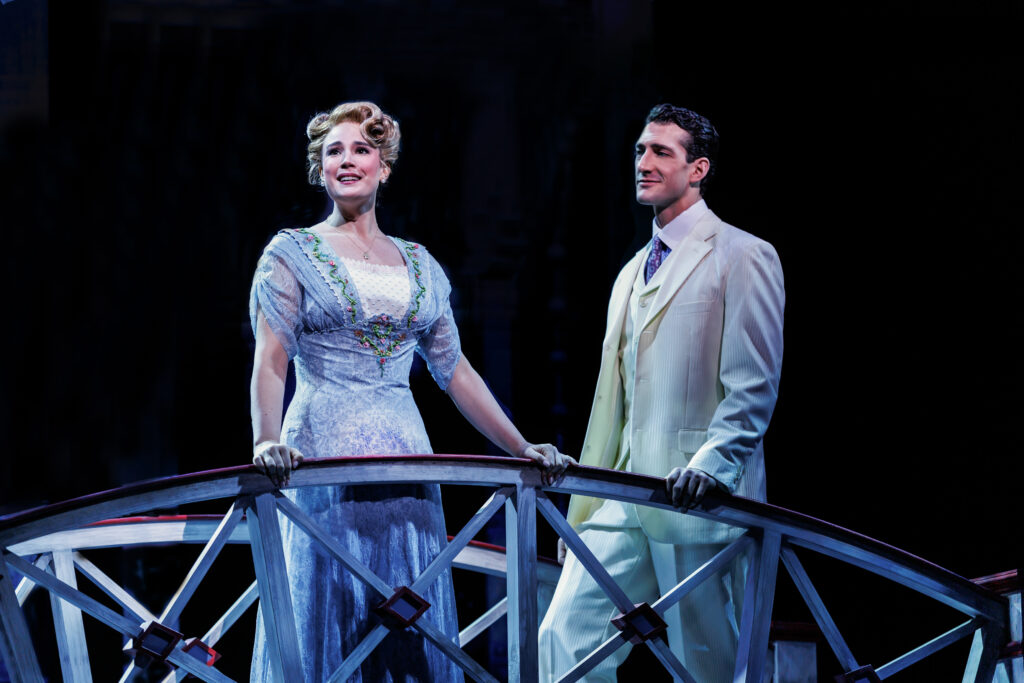
Costuming reinforces the authenticity of the era and evokes an Edwardian setting, with tailored suits, flowing dresses, neutral and pastel color palettes and stunning headwear.
Together, the set, projections and wardrobe create an immersive theatrical experience that is both nostalgic and fresh.
A Classic that Continues to Connect
For many audience members, “The Music Man” carries cherished memories of both the original stage play and 1962 film adaptation. Yet, the live production offers continued relevance for all ages to enjoy. As the sounds of a marching band reverberate through the theater, choreography unfolds with an acrobatic flair and performers sustain powerful vocals despite Denver’s thin air.
It’s no surprise that “The Music Man” remains a cornerstone of American musical theater. The Denver engagement is brief, but for lovers of music, humor and nostalgia, this River City revival proves well worth the march downtown.
Editor’s note: Experience the fun of “The Music Man” at Denver Center for the Performing Arts through March 1. Tickets are available at denvercenter.org.

It sounds like the cast and crew did the old classic justice and beyond. I wish I didn’t have to miss the production, but I’m glad it’s happening!