
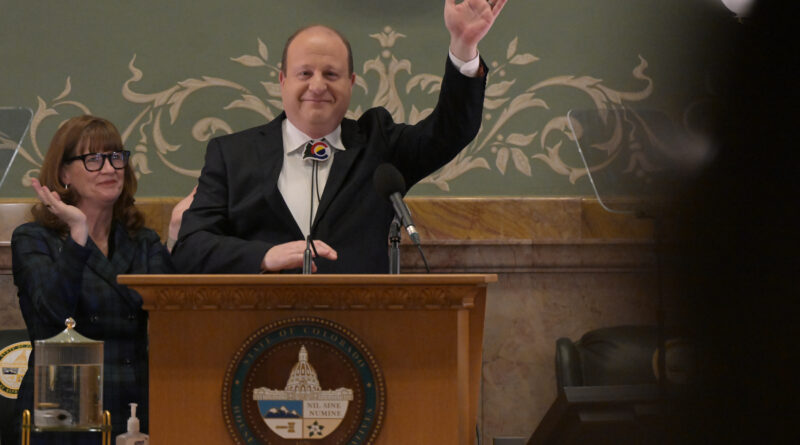
Gov. Jared Polis Delivers a Farewell Address As Colorado’s Cost-of-Living Takes Center Stage
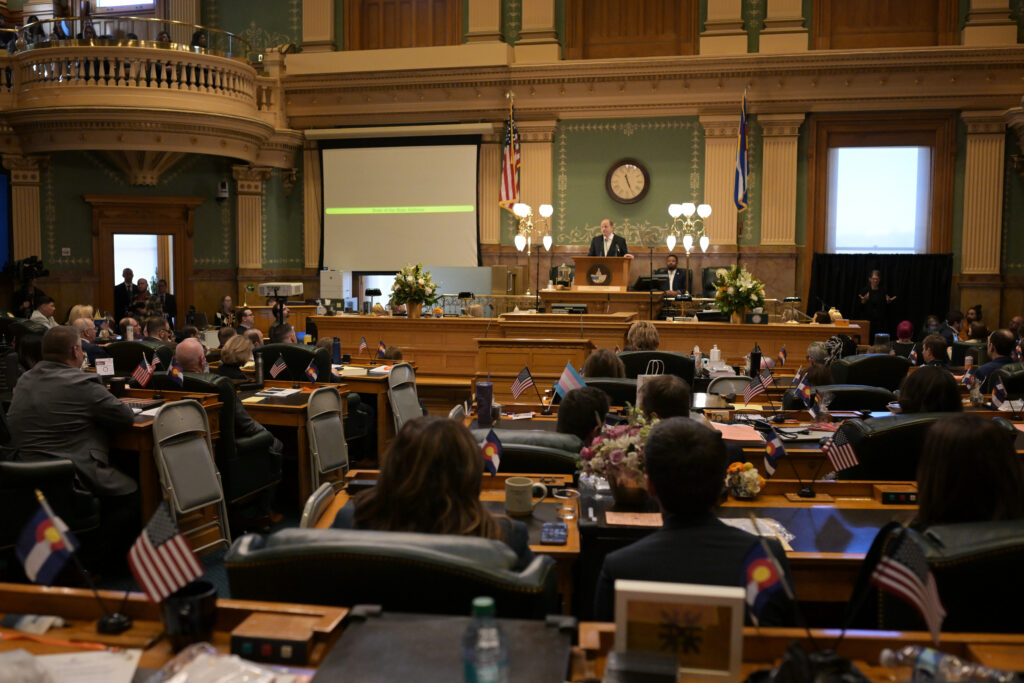
In his final “State of the State” address on Jan. 15, Governor Jared Polis defended his governing approach over the last seven years. He highlighted wins and outlined priorities that remain unfinished after two terms filled with unforeseen events “altered and shaped the trajectory of our state forever.”
After seven years of leadership aimed at improving life for Coloradans, he acknowledged the disruption of the COVID-19 pandemic and the political headwinds that followed, including pressures that tested institutions, strained budgets and reshaped what residents expect from state government.
In Colorado, the price of a home, an insurance bill and child care can determine whether families stay and thrive…or leave to survive.
With the economic landscape shifting from boom-time magnetism to a more fragile equilibrium, affordability pressures have collided with an increasingly polarized political environment. As Polis prepares to close out his final months as the state’s leader, it is clear that the next governor will inherit a high-stakes agenda – defined as much by fiscal constraints as by public urgency.

The Jan. 15 speech was a farewell address framing the state’s next chapter around the idea that affordability is a defining measure of government performance. Polis argued the path forward necessitates faster homebuilding, lower health care costs and sustained investment in education. He also warned that federal policy shifts and funding threats are adding new layers of volatility that gubernatorial candidates and voters should be prepared for.
Delivered just one day after legislators opened a session shaped by competing pressures and a projected budget shortfall of roughly $800 million, Polis offered a survey of Colorado’s current condition and a blunt reminder that there’s no quick-fix on the horizon.
Measured by Affordability
In Colorado, residents are forced to weigh the tradeoffs of long commutes, inadequate housing and increased child care expenses. Rising insurance rates and wildfire exposure have exposed rural communities as especially vulnerable, worsening longstanding tensions over whether statewide solutions can alleviate local realities.
Polis’ message was less about a single legislative package than an analysis of whether state policy can bend the curve on household costs. He framed affordability as the state’s central performance metric and the standard by which voters judge both economic health and the competence and legitimacy of government.
The argument lands in a political environment where consensus about the problem is wider than consensus on the cure.
Supporters of Polis’ approach point to state investments in early education, housing incentives and consumer protections as proof that government can reduce costs and expand opportunity. Critics counter that state mandates and regulatory growth can carry unintended consequences, with many households still experiencing affordability as a daily barrier.
The gap between both perspectives has become a defining feature of Colorado politics. The outgoing leader urged lawmakers to move faster on reforms that expand housing supply, enforce prices and prioritize policies that curb costs. His words cautioned the state’s next governor that policy must provide relief to residents who love Colorado, but are worried about the cost to stay.
Despite disagreeing on causes and cures, affordability is a topic that both political parties acknowledge as a defining concern.
Housing Supply and Control
Housing sat at the center of Polis’ policy framework. He returned to the familiar premise that Colorado will not reduce costs without building more homes, and called for fewer procedural delays, expanded land pathways and more supply near jobs and transit. Pointing to steps already taken, such as construction defects liability and reduced contract turnaround times, he touted the state’s progress under voter-approved Proposition 123.
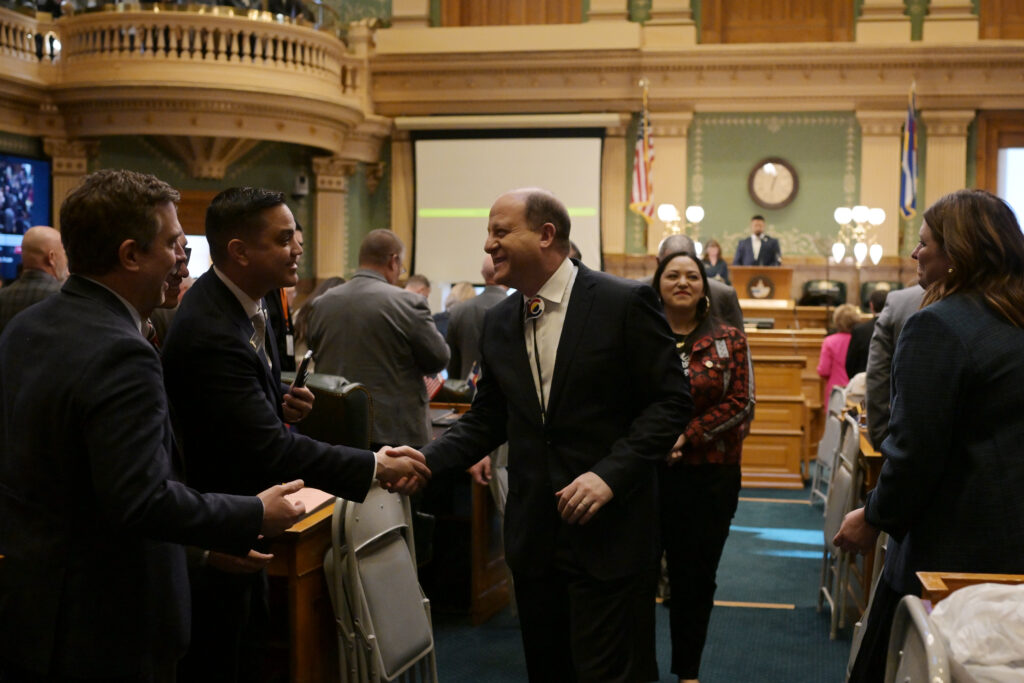
He also promoted a new initiative called the Housing Opportunities Made Easier (HOME) Act – a strategy to build on underutilized land held by schools, transit agencies and housing authorities.
Supporters say the approach is overdue because the shortage is structural, and that the state must play a stronger role to ensure local reforms match the scale of demand. Opponents counter that state-driven land-use reform underestimates infrastructure and water limits and invites backlash, arguing growth must be paired with transportation, schools and public services that can absorb it.
Some skeptics point to newly built or investor-held properties sitting vacant in certain markets as a financial misalignment with public goals. They argue that new construction without meaningful cost relief reflects a market and policy structure that rewards development through tax credits and incentives while leaving working families no better off.
Whatever the diagnosis, efforts to loosen zoning rules have triggered forceful defenses of local authority, especially in suburban corridors and rural towns where growth is viewed as a threat to identity. Polis signaled he is likely to keep pushing, backing proposals to expand housing on underused public and quasi-public land and continuing reforms aimed at faster construction.
Insurance, Wildfire and the Cost of Staying Put
If housing is the front door of affordability, insurance is the monthly bill that can make ownership untenable, especially in wildfire-prone regions.
Polis gave direct attention to homeowners insurance, saying, “This year we must bring homeowners insurance rates down,” noting costs “up 91%” since 2019.
His proposed direction leaned on mitigation and consumer-oriented strategies such as hail-resistant roofs, reduced fire risk and other steps meant to lower claims and stabilize premiums. He also pointed to auto insurance costs, citing a “Roadmap to Reduce Auto Insurance Premiums” and tying safety measures like expanded wildlife crossings to fewer collisions and claims.
Education, Opportunity and Hope
Polis leaned on education as one of the clearest markers of his tenure, highlighting universal preschool and full-day kindergarten among the signature accomplishments he emphasized. He has referred to himself as an education-focused governor, and used the final address to lean into that identity.
In addition to making early education accessible to all children in the state, he claims increased teacher pay and costs savings related to preschool and kindergarten as some of the greatest accomplishments under his tenure.
Supporters credit the governor with turning early learning into statewide infrastructure, while critics point to implementation complexity and the constraints of funding formulas.
Since statewide expansion is only as strong as staffing and quality in each community. They also point to the state budget as proof that big programs can become politically fragile when revenue is limited and costs rise faster than the state’s spending caps.
The next governor will face the education debate with the task of sustaining programs, stabilizing quality and ensuring rural and suburban communities can access the same benefits as the urban core.
Health Care Costs and Medicaid
Polis framed health care as an expense that threatens household stability and the state budget.
“We have to do more to rein in health care costs,” he argued, with claims that rigged pricing and special interests create barriers to affordability.
He also called for stronger enforcement and continued policy pressure on pricing and billing practices.
Despite Colorado’s active role in challenging consolidation and unclear pricing, healthcare will likely remain one of the hardest problems for the next governor to manage, because many of the most powerful levers sit outside the state’s control. Medicaid growth continues to compete with education and other priorities in a tight budget year, while hospital systems, insurers and pharmaceutical companies operate within national markets and federal rules that can shift quickly.
Supporters of Polis’ approach argue that Colorado must keep tightening oversight and expanding consumer protections to produce real savings, especially for families who feel priced out of care. His successor will be faced with the task of responding to destabilizing networks and shrinking access .
Energy and Climate: Progress, Pushback and Regional Tension
Polis has often positioned Colorado as a state that can pursue climate goals while remaining economically competitive. During his address, he presented statewide energy transitions as issues of climate and cost.
“We are showing that it’s possible to cut pollution, lower costs and spur innovation,” he said, citing improvements in air-quality days and increasing the use of low-cost, clean energy sources.
With new investment and jobs tied to renewable infrastructure and electrification, he criticized federal preferences for “expensive, out-of-date coal production.” He also reaffirmed the state’s goal of moving toward 100% clean energy, a goal that doesn’t always sit well with opponents.
Those concerned about the transition to clean energy point to potential cost increases and governmental impositions for communities that experience energy as an economic lifeline.
For the next governor, energy policy will likely remain one of the most polarized arenas because it blends costs, identity and geography, with federal policy that can shift quickly and accelerate or disrupt state plans.
Political Polarization and the “Colorado Way”
The political atmosphere around the “State of the State” was shaped by political conflict – both national and statewide. A significant portion of the speech focused on what Polis called “The Moment We’re In,” portraying the federal government as a force that’s making life “harder and less affordable.” With threats to funding for child care, disaster recovery and scientific institutions, partisan issues have increased social polarization across the country.
On the day of the state legislatures’s opening session, the Colorado House voted to remove “His Excellency” as a formal title for the governor, a gesture that reflected broader impatience with institutional pomp and partisan theatrics.
Framed his final-year governing environment through federal conflict, Polis’ criticism of Washington’s funding threats and actions related to immigration were followed by a warning that national decisions may destabilize Colorado’s budget and policy trajectory.
Supporters view his defense of state autonomy as protective, while opponents believe it intensifies polarization and distracts from practical problem-solving. Either way, the federal lens is now part of Colorado’s gubernatorial job description, and it will shape the next administration’s tone and strategy.
The Inheritance of Polis’ Successor
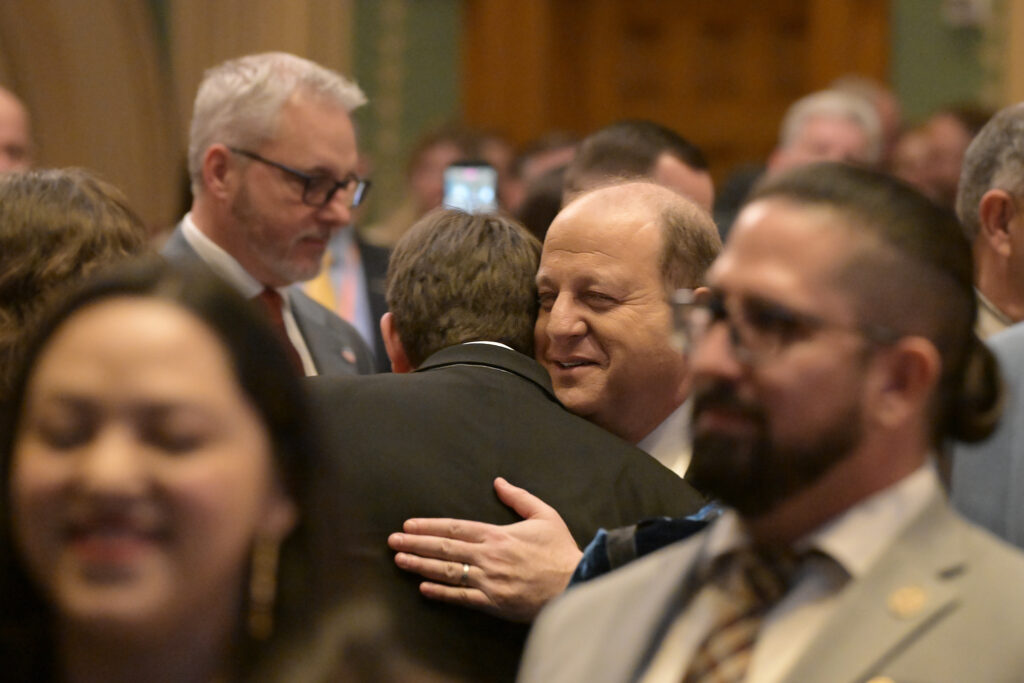
Polis will leave office in January 2027. His final address served as a briefing on what remains unresolved in the state. The next governor will inherit a governing landscape defined by several constraints, including a cost-of-living mandate that dominates Colorado politics.
Since housing and insurance are no longer specialty policy arenas, success will be measured by whether costs feel more manageable and whether relief shows up in everyday life.
A projected budget shortfall and continued Medicaid pressures will leave limited room for new commitments that could impact education, health care and public safety priorities. At the same time, housing debates will keep straining state-local trust, with no one-size-fits-all solution in sight.
Most importantly, federal volatility, funding threats, immigration disputes and regulatory swings will demand a governor who can manage, negotiate and, when needed, fight to protect Colorado’s interests.
As defenders argue that he built durable systems in early education and clean energy, critics of the state’s 43rd governor argue that the systems won’t matter unless they translate into broad affordability and improvements in both safety and stability.
The next governor will inherit both Polis’ policy architecture and public sentiments surrounding it. Colorado is home to a legacy of pride and promise, but residents are frustrated by costs and ready for leadership that convert plans into much-needed remedies and long-awaited stabilization.
Editor’s note: The full transcript, as prepared for delivery, can be found here.

