

Federal Nutrition Guidelines Call for Return to Whole Foods as Diet-Related Disease Rates Climb
New federal nutrition guidelines released this week make a clear case for a return to whole, nutrient-dense foods. Officials unveiled a “reset of U.S. nutrition policy,” that entails a sharp reduction in processed foods and added sugars. The announcement, officials say, was prompted by a national health emergency, as chronic diet-related health problems continue to burden Americans and the nation’s health system.
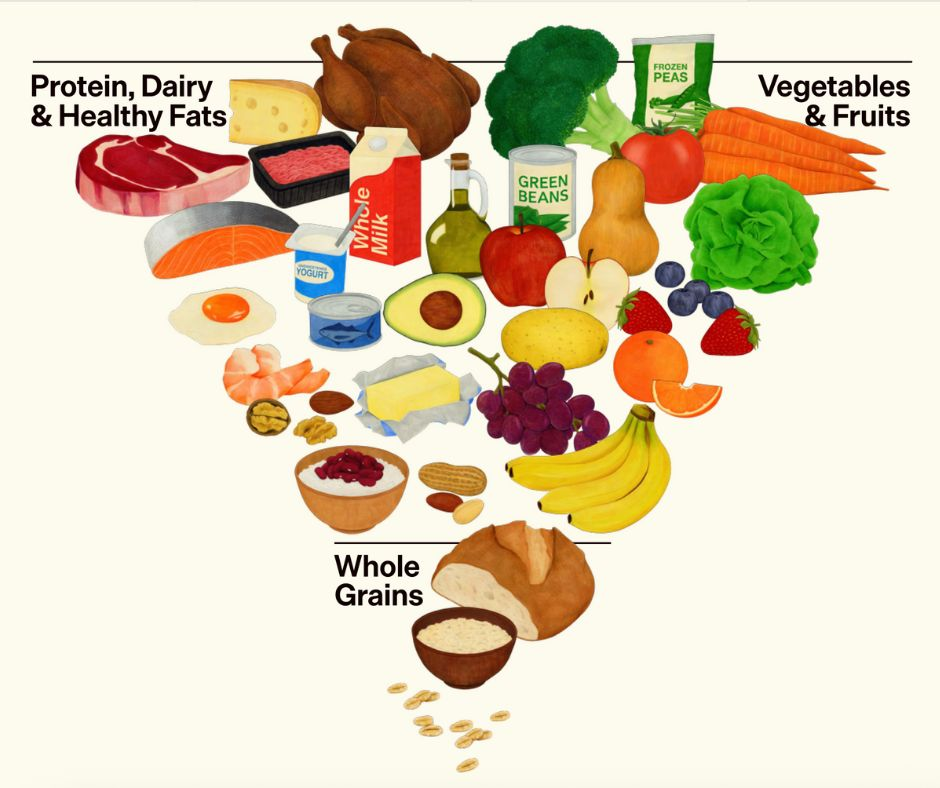
The Dietary Guidelines for Americans 2025–2030, jointly published by the U.S. Departments of Agriculture (USDA) and Health and Human Services (HHS), emphasize fruits, vegetables, whole grains, high-quality proteins and healthy fats. They advise individuals to avoid “highly processed packaged, prepared, ready-to-eat or other foods that are salty or sweet,” including soda, chips and other snack foods.
The guidelines also call for limiting added sugars, noting that “no amount of added sugars or non-nutritive sweeteners is recommended or considered part of a healthy or nutritious diet.”
Officials say the recommendations reflect the latest science on nutrition and health, reinforcing evidence that dietary patterns built around whole, minimally processed foods support long-term well-being.

Dietary Shifts Over Time
Health statistics have improve dramatically in the last 100 years, with expanded life expectancy related to public health measures and medical advancements. However, despite less instances of death caused by infectious disease, rates of chronic, non-communicable diseases such as heart disease and cancer now account for the vast majority of deaths.
Nutrition experts have observed a dramatic transformation of the North American diet over the last half-century. Foods high in refined sugars, sodium and industrial fats – including sweetened beverages, microwave meals, packaged snacks and fast foods – have become ubiquitous.
Public health data indicates that ultra-processed foods now accounts for a majority of calories consumed in the United States, especially among children and adolescents. This shift has occurred alongside rising rates of obesity, type 2 diabetes and cardiovascular disease.
Researchers note that before soda, chips and other highly processed products became mainstream staples, diets were more heavily based on minimally processed staples such as fruits, vegetables, whole grains and lean proteins.
School Nutrition Overhaul
Federal efforts to improve nutrition are not new. Nearly 15 years ago, First Lady Michelle Obama championed a sweeping overhaul of school meal standards under the Healthy, Hunger-Free Kids Act of 2010. Part of her broader “Let’s Move!” initiative, the effort was aimed at reducing childhood obesity and encouraging healthier lifestyles.

The law updated nutrition standards for the National School Lunch and Breakfast Programs to increase servings of fruits, vegetables and whole grains and reduce sodium and unhealthy fats. It elevated overall meal quality for the more than 50 million students who rely on school meals daily.
Studies conducted after the implementation of the Healthy, Hunger-Free Kids Act of 2010 found measurable improvements in the nutritional quality of meals served and reductions in energy density. Students received healthier ratios of calories to nutrients, and in July 2024, USDA implemented additional limits sodium in school meals and added sugars in yogurt and flavored milk.
Research suggests that children in poverty experienced declines in obesity prevalence following the implementation of the new standards. A study published by the National Institutes of Health reported that the prevalence of obesity would have been 47% higher in 2018 if the legislation had not passed.
The relationship between nutritional standards and healthy growth highlights the potential of policy-driven nutrition improvements to address health disparities.
Debate Over Saturated Fats and Guideline Changes
Despite broad consensus on the benefits of reducing ultra-processed foods and added sugars, opposition to some elements of the updated guidelines has emerged. Medical professionals and nutrition scientists caution against loosening long-standing limits on saturated fats.
For decades, major public health organizations such as the American Heart Association (AHA), have advised limiting saturated fat intake to reduce the risk of cardiovascular disease.
AHA Guidance cites evidence that saturated fats raise low-density lipoprotein (LDL) cholesterol, a key risk factor for heart disease. Replacing foods high in saturated fat with options containing unsaturated fats has been shown to improve cholesterol profiles and lower heart disease risk.
The 2020–2025 Dietary Guidelines for Americans recommended that saturated fats make up less than 10% of daily calories, a benchmark based on systematic evidence reviews. Public health advocates have urged that such limits remain in place, arguing that increased consumption of saturated fats could potentially worsen cardiovascular outcomes, especially in populations already at high risk.
This debate has intensified with reports that the 2025–2030 guidelines may shift emphasis toward incorporating more full-fat dairy and certain animal fats as part of “whole food” eating.
When HHS Secretary Robert F. Kennedy Jr. initially began to urge Americans to eat more saturated fats in October 2025, opponents were concerned.
“The recommendation around saturated fat has been one of the most consistent recommendations since the first edition of the dietary guidelines,” said Cheryl Anderson, an American Heart Association board member and professor at the University of California.
In a 2025 interview with The Guardian, she explained, “The more saturated fat that’s consumed in the population, the higher the risk for elevated cholesterol, the more people develop cardiovascular disease.”
On the contrary, Ronald Krauss, a professor of pediatrics and medicine at the University of California shared his findings that saturated fats may be less harmful than previously thought. His studies show that reducing saturated fat intake is only beneficial if replaced with unsaturated fats such as olive oil. Since replacing saturated fats with refined carbohydrates and sugars might worsen health, it is important that guidelines address overall dietary patterns.
Critics contend that while saturated fats are just one component of overall diet quality, removing or relaxing limits without clear evidence could undermine efforts to reduce disease.
Making the Case for Healthy Eating
Officials behind the 2025–2030 dietary guidance argue that the latest science supports a return to nutrition-dense eating patterns to prevent chronic disease and improve quality of life.

Whole foods supply essential vitamins, minerals, fiber and phytonutrients that support metabolic health, immune function and well-being. A diet built around fresh produce, whole grains and high-quality proteins has been associated with lower risk of heart disease, certain cancers, diabetes and obesity.
Public health economists point to the staggering costs of diet-related disease to both families and the broader healthcare system, and the new guidelines are expected to influence federal nutrition programs, school policies and public health education efforts nationwide.
“We are urging Americans to make food choices that support long and healthy lives,” a USDA spokesperson said, noting that the recommendations serve as the foundation for millions of meals served in schools, military bases, hospitals and community programs across the country.
Community organizers are calling for increased resources for families struggling to afford basic necessities amid rising food costs. They worry that the cost of adherence will be barriers to individuals experiencing food insecurity. Additionally, they point to recently approved Food Restriction Waivers that allow bans on sugary drinks, candy and junk food as evidence of policies demanding behavior change without sufficient parallel investment in affordability and access.
As debate continues over specific nutrient recommendations, the broader consensus that healthier, more nutrition-dense eating patterns can improve quality of life and support a healthier next generation remains strong. As consumers adjust to new guidelines, nutrition experts and community advocates emphasize that lasting change will depend on both individual choices and policies that keep healthy foods within reach.
Editor’s note: To learn more about the USDA’s updated guidelines, visit dietaryguidelines.gov.

