
Water for Elephants Delivers a Dazzling, Human-Centered Spectacle at the Denver Center | A Review
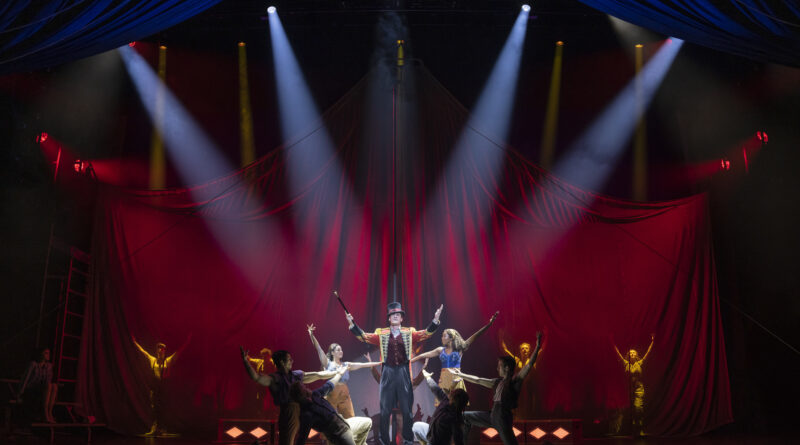
Entering the Buell Theatre is always a surprising treat – like a beautifully wrapped gift, the stage design offers the first glimpse of what’s to come. At “Water for Elephants,” a lush, blue velvet curtain is draped the crown of a grand circus tent. Its rich, jewel-toned mystique signaled that the audience was about to step into a world suspended between spectacle, memory and awe-inspiring fun.
Presented by the Denver Center for the Performing Arts as part of its 2025/2026 Broadway season, “Water for Elephants” wastes no time transporting theatergoers into the volatile, dust-filled promise of a 1930s traveling circus. Anticipation hums before the first note is sung. When the curtain parts, a playful and astonishingly athletic ensemble bursts onto the stage with acrobatics and stunts that are equal parts balletic and breathtaking.
What unfolds is movement-driven, muscle-forward theater, and a production that uses the human body as both apparatus and metaphor.
The Rhythm of the Rails
Based on the 2006 bestselling historical fiction novel by Sara Gruen, “Water for Elephants” highlights the narrative of Jacob Jankowski, a young man whose life veers wildly off course after tragedy propels him onto a circus train. For audiences enchanted by the romance of rail travel, the show’s recurring train motif is particularly exhilarating.

In one of the production’s most arresting sequences, performers become the train itself – shoulders angled, torsos swaying, limbs pulsing in sync with the metallic rhythm of wheels on tracks. The choreography captures momentum, escape and inevitability all at once.
The movement created by the ensemble brings the story forward into the mysterious life of a traveling circus troupe. Each member owns their role and brings the past to life inside of the “Benzini Brothers Most Spectacular Show on Earth.”
Memory, Time and an Intergenerational Lens
The story unfolds through the reflections of an older Jacob, whose presence adds emotional ballast and structural clarity. Flashbacks move between youth and age, underscoring the intergenerational theme that anchors the production and creates questions about the senior storyteller’s life.
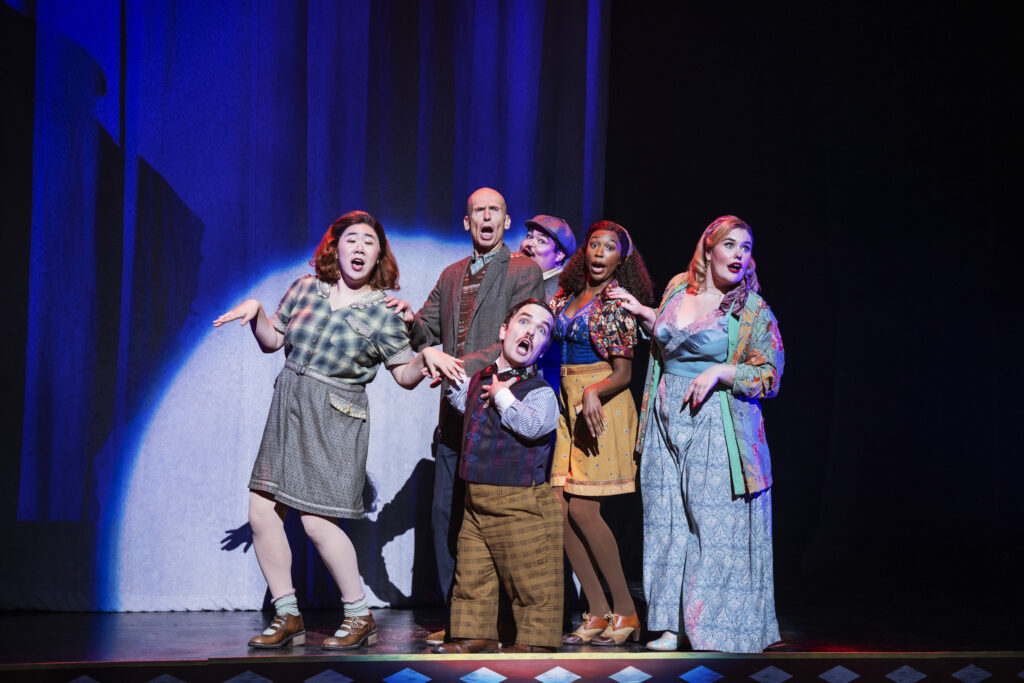
Audiences watch a young man fall in love, find courage and, at times, reckon with memory of a life gone by. The older Jacob, played by Robert Tully, embodies the weight of experience without dimming the vitality of the past. His stories are exquisitely framed by nostalgia and nuance. The theatrical balance honors both the urgency of youth and the perspective of age.
A Cast That Commands the Big Top
Helen Krushinski delivers a standout performance as Marlena. Her melodic, almost hypnotic voice floats across the theater with crystalline control, particularly in her early scenes opposite Silver Star, the show’s celebrated horse. Their first encounter is exquisitely intimate, as Marlena belts out a sentimental ballad to comfort the faltering steed.
Silver Star’s physical embodiment, represented by Yves Artiéres, is among the production’s most imaginative triumphs. Through ribbon dance and sculptural movement, the performer conveys the grace, strength and spirit of a horse in purely human form. The effect is a mesmerizing homage to circus tradition without controversial animal exploitation.
Zachary Keller, the actor portraying Jacob, charts an impressive emotional arc, moving from timid and restrained to resolute and impassioned. His vocal range mirrors that journey, shifting from vulnerability to full-throated defiance as the stakes rise.
Equally commanding is the ringmaster, August. Played by Connor Sullivan, the antihero’s magnetic presence turns menace into theater. His descent from a penny-pinching trickster into jealous rage is volcanic yet controlled. His performance balances theatrical bravado with chilling unpredictability, keeping the audience at the edge of their seats.
The ensemble is the true heartbeat of the production. From Camel, the old man with the gentle limp, played by Javier Garcia; to Walter, the circus clown played by Tyler West; and Barbara, the commanding lead showgirl played by Ruby Gibbs, every supporting role is etched with specificity.
The ensemble tumbles, rumbles and dances with extraordinary precision. At times, the stage feels like an actual circus ring with trapeze artists, acrobatic pyramids and stunts that make squeamish viewers hold their breath.
Animals Reimagined Through Artistry
One of the production’s most compelling achievements is its portrayal of animals. Rather than using live creatures, the show embraces stylized movement and human embodiment.
The animals feel real due to the intention behind their every move. Through choreography and character work, performers convey instinct, loyalty and grace without diminishing the story’s emotional gravity or presenting ethical challenges.
For contemporary audiences who appreciate the romance of the circus but dislike its reputation for exploitation, the artistic choices of Ray Wetmore, JR Goodman and Camille LaBarre feel responsible and innovative.
Joy, Risk and Power
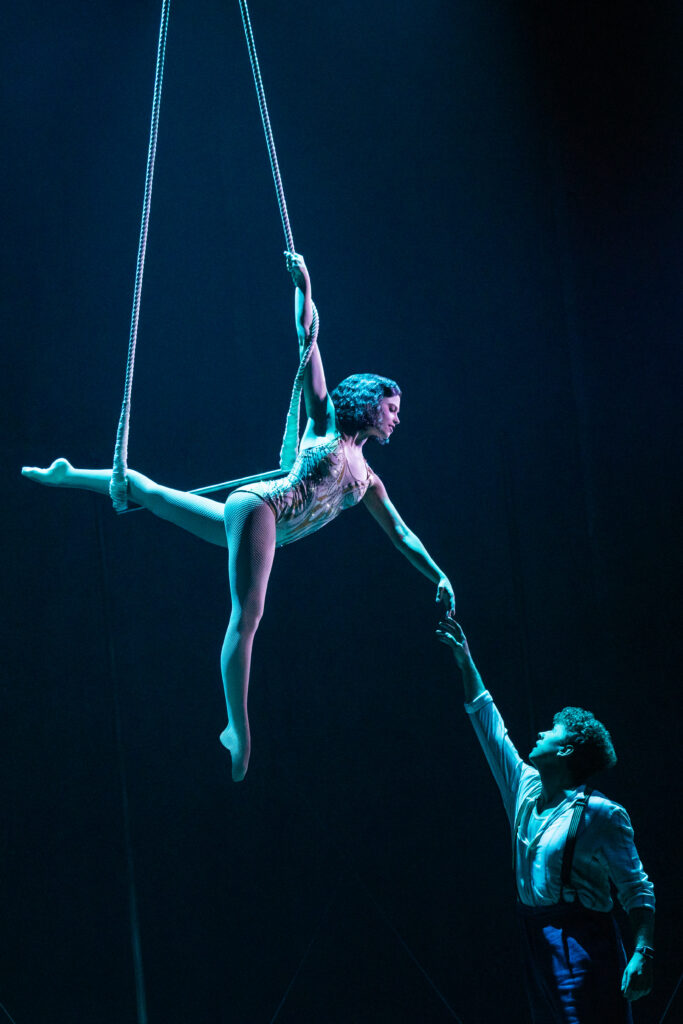
By the final curtain, “Water for Elephants” emerges as one of the most joyful, emotionally expansive and technically impressive productions to grace Denver’s stage in recent memory.
Every scene unfolds with intention and imagination, and every applause feels earned.
Audiences will love the grandeur of the circus, reimagined through a humane and artful lens. It is a soaring, theatrical love story, grounded in complexity and intrigue, with heart and extraordinary human talent.
