
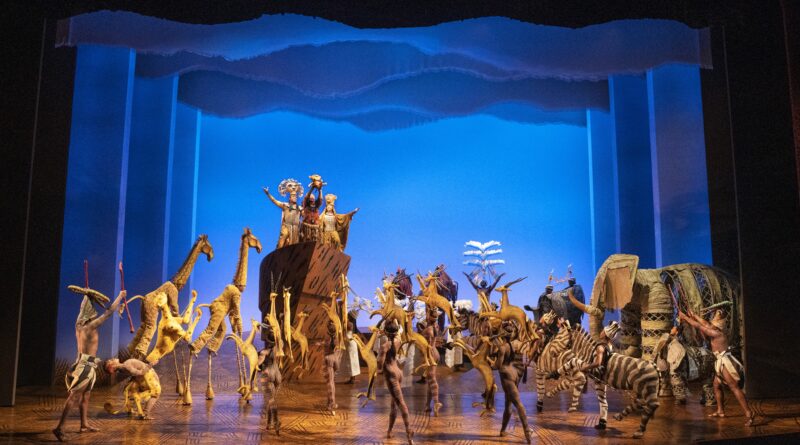
The Lion King on Broadway is a Magical Experience in Denver: A Review
The World’s Best Musical Makes a Roaring Return to the Mile High City
From start to finish, The Lion King musical is a breathtaking and mindblowing experience.
Packed with nostalgic familiarity, festivity and fun, it’s easy to see why the iconic theatrical production is widely known as the “World’s Best Musical.”
Playing at Denver Center for the Performing Arts’ Buell Theatre through Nov. 16, this iconic production is a highlight of the season.

Somewhere on the Savannah
While waiting for the curtain to rise, I observed the stage and took delight in the gathering of mudcloth-adorned instruments on either side. The show features approximately 80 different instruments from cultures around the world; though drums are the only immediately-visible elements of each setup.
As the performance continues into the night, a pair of musicians retrieve an endless supply of instruments from each setup, with sounds emanating from every corner of the planet.
The curtain itself features a radiant collection of Adinkra symbols. Originating with the Akan people of Ghana, the symbols represent wisdom, philosophy and significant life events. Rather than appearing with uniformity, they appear as hand-drawn inscriptions on a stone wall.

The stage setup is the first suggestion that the production incorporates African elements. Yet, I was unprepared for the full immersion into the Motherland.
The Lion King musical, based on Disney’s 1994 animation, leaves no question about its setting. The cartoon, however, is slightly more ambiguous, with a score composed by German music producer Hans Zimmer, pianist Elton John and lyricist Tim Rice. Its sing-songy tone is a subtle nod to Africa, but doesn’t make a deep dive into the ethnic considerations of its inhabitants.
The musical, on the other hand, is steeped in tradition, culture and pride. There is no question that African elements such as rich oral histories, traditional storytelling and ancestral adornments, are a central feature of the show.
“To capture the intangible spirit and sound of the savannah, South African performers are cast members of every production of The Lion King around the world except Japan,” explains the APPLAUSE playbill.
“The local artists mastered the pronunciation of five different African languages used in the show.”
A Warm Welcome
As the curtain finally lifts, Mukelisiwe Goba belts out a beautiful rendition of “Circle of Life with “Nants’ Ingonyama” as Rafiki. The playful character, represented in the movie by a mischievous and mysterious mandrill, provides lyrical narration throughout the play.
Goba’s powerful voice sent shivers down my spine as the buttery Bantu languages of Xhosa and Zulu incorporated clicks with consonants. Despite most of the audience not understanding the words, Rafiki’s changing tone signals joy and sadness as the storyline carries on.
The costumes, characters and concepts are unmistakably African – in a bold and beautiful way.
The Epitome of Design
Julie Taymor’s stage adaptation of The Lion King debuted in 1997. The American director and writer received Tony Awards for Direction of a Musical and Best Costume Design, in addition to Drama Desk Awards for Outstanding Director of a Musical, Outstanding Costume Design and Outstanding Puppet Design in 1998.
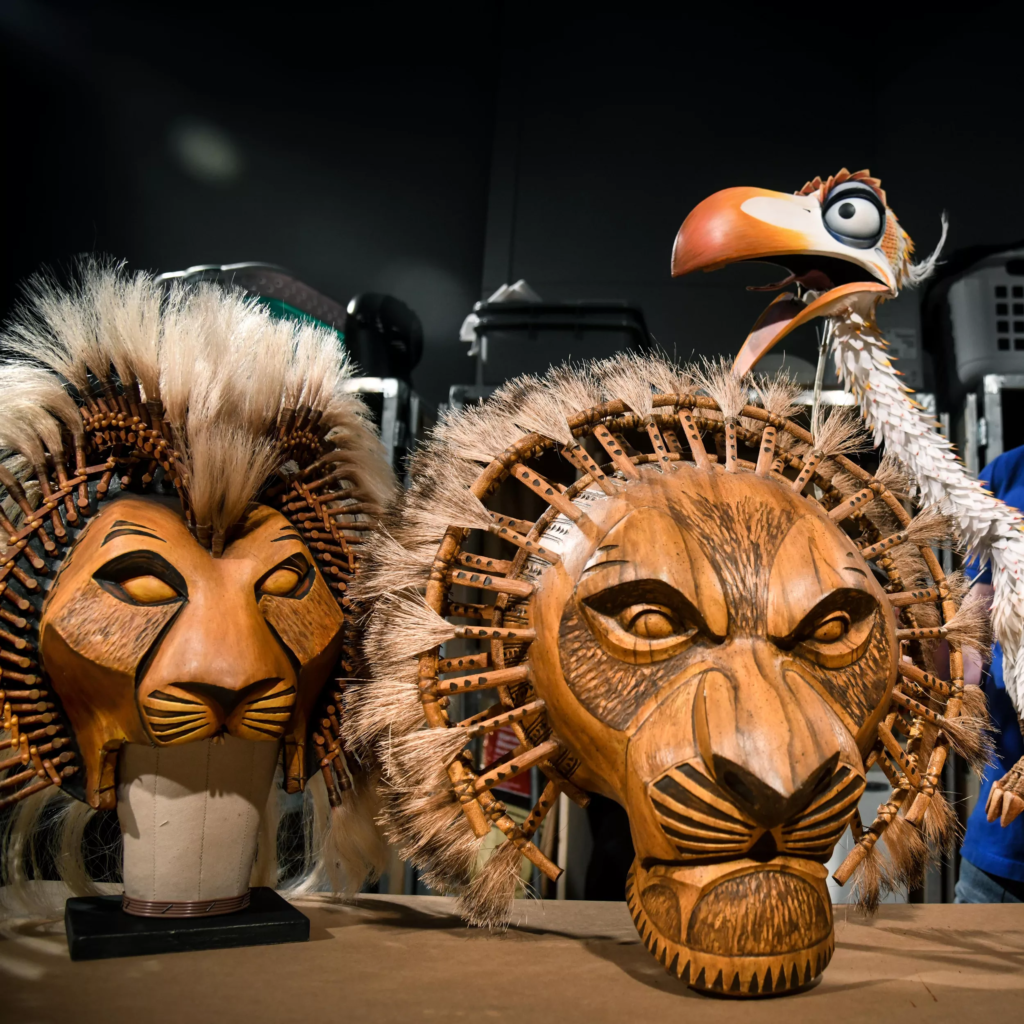
After experiencing The Lion King up-close, the recognition makes perfect sense.
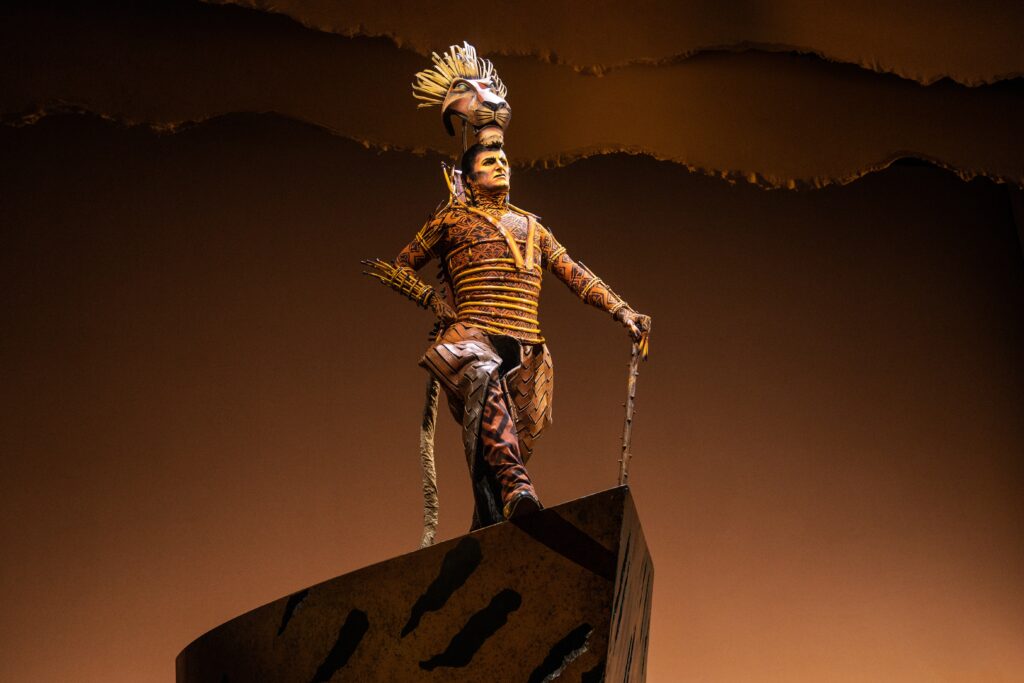
Taymor’s creative use of “double event” puppetry and full-body masking brings the imagined world to life. Animals portrayed by puppets are guided by masterful members of the cast. Towering stilt giraffes, shadow puppets, pole puppets and intricate headpieces each introduce an immersive experience from beginning to end.
The cheetah, hyenas, elephants and birds were crowd favorites, with poles, stilted legs and light, carbon fiber masks creating ease of action. At pivotal moments in the production, mechanics are used to create depth and movement; and while the stage design itself is minimal, heightened features and innovative plant-life further add to the Savannah’s appeal.
Overall, the production feels interactive, making use of the orchestra aisles and balconies. Singers, dancers and puppeted characters course seamlessly through the audience, and sound surrounds the theatre in the most beautiful way.
Casting Perfection
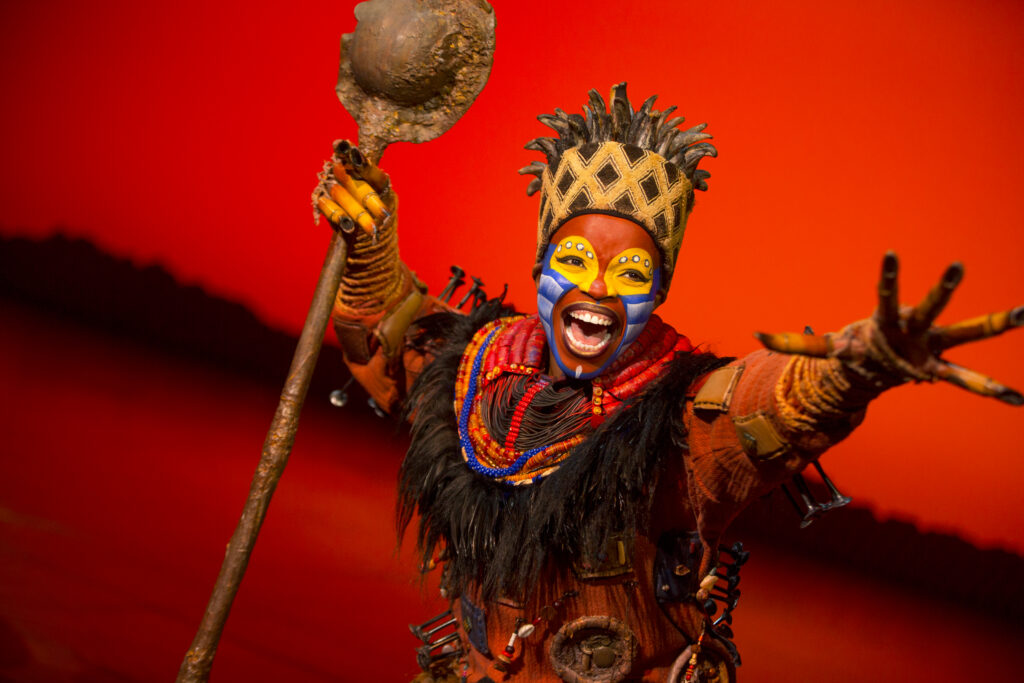
The cast of The Lion King is marvelous. In addition to the beloved Rafiki, lighthearted characters introduce humor at the perfect times. The plot follows the animated original closely, but each characterization is immaculately matched.
Zazu, played by Nick LaMedica, is a lively and sarcastic dodo bird whose prominence is felt throughout the entirety of the show.
Timon, played by Robert Creighton (with Nick Cordileone assuming the role from Nov. 4-16), and Pumbaa, played by Danny Grumich, are phenomenal characterizations of the dynamic duo. Their accents and puppeted accoutrements are impeccable.
Scar, played by Peter Hargrave, offers a contrasting voice and perspective. His conniving approach, British accent and “executive staff” of hyenas, played by Martina Sykes, Forest VanDyke and Sam Linda, offer villainous balance with an added touch of humor.

Still, it’s the lions who steal this show.
Young Simba and Young Nala, played by Bryce Christian Thompson and Emmanuella Olaitan (alternating with three other young actors and actresses at certain performances) share a playful dynamic. Both execute their roles with precision and remarkable talent – they are on-cue, on-point and generally outstanding.
Along with Sarabi, played by Jennifer Theriot, who sings a heartwrenching rendition of “Nao Tse Tsa,” the ensembled lionesses are elegant and soulful. Their delivery of songs “Shadowland” and the Lioness chant are steeped in femininity and love. Each tune feels like an encapsulation of ancestral protection.
A Royal Legacy
Mufasa, played by David D’Lancy Wilson, is a strong and steady king. His regal wisdom and guidance sets the stage for his predecessor, and as he approaches his demise, his subtly shifting tone predicts the passing of the crown.
In the act preceding intermission, we witness a transition from youth to adulthood, as the evolved version of Simba swings onto the stage.
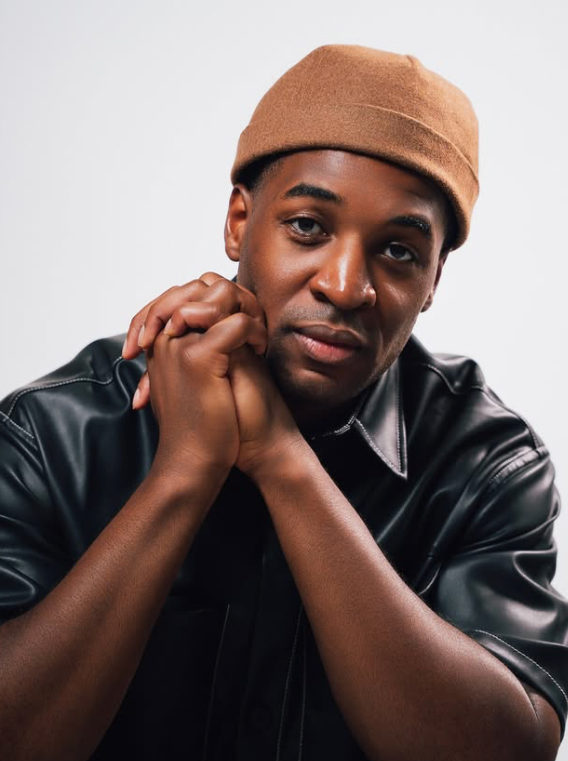
Played by Gilbert Domally, the star of the show transforms into a worthy monarch before our eyes. Upon our introduction to the evolved character, his bright, clear voice is enthusiastic. As the emotional plot thickens, his delivery shifts into a stronger, more reflective and determined tone.
Nala’s evolved character, played by Thembelihle Cele, shares a different outlook on her path to becoming queen. Seeking hope and relying on faith and the prayers of her pride, she sets out on a quest to protect her family’s future. Fueled by love and desperation, she challenges Simba, pushing him to explore the pain of his past and assume his position as king.
The Lion King is really about legacy, love, loss and finding oneself,” Domally said, during an interview on “The Exchange” podcast.
“The character Simba really goes on this journey to find out who he is and take his rightful place at the end of the show. So, it’s really a coming-of-age story, in a way; but it’s so powerful and electric. The audiences go crazy night after night…the music is so heightened that you’re just overwhelmed with emotion, because it’s just an incredible, incredible story.”
Cherished Moments Brought to Life
At the end of the first act, tears of joy filled my eyes. Having seen the animated and life-action movies multiple times, I was overwhelmed with emotion as ethereal voices echoed from the stage.
Audiences of all ages experience this theatrical production with memories of their first time watching the longstanding animated classic.
As Simba journeyed to find his purpose, I explored the plot from a different perspective – one that could relate to his trauma, the burden of his past and the intention to set out on a new adventure. It was cathartic to sit in a dark theatre, surrounded by adults who likely traveled similar paths from their childhood to adulthood.
Despite the heaviness of underlying themes, kids and grownups laughed together, marveled at the stunning characters, absorbed the chorus of songs and braced for some of the harsh scenes.
“It was much more dramatic than I’ve seen before,” said one theatregoer, referring to the heartbreaking moment when the king meets a tragic end. “It was almost scarier before – it was ferocious. They’ve mellowed it out some.”
When the epic fight overtakes Pride Rock, stage fog, bursts of lights and thundering booms create urgency without terrifying the youngest members of the audience.
Then, as Simba takes his rightful place and normalcy returns to the kingdom, the ensemble returns to the stage with a herd of happy, celebratory puppets, and the emotion creeps in all over again.
A Magical Must See
The first national tour of The Lion King premiered at Denver’s Buell Theatre in 2002. Since then, the musical’s total worldwide touring gross has swelled to over $8 billion. The third longest-running Broadway show in history, the impressive box office performance speaks to the ongoing love for the franchise.
With exclusive additions to the iconic score, a Magic Mike-style dance break and a special nod to a local landmark, The Lion King is a must-see musical. It inspires repeat viewings, and touches the hearts of all.
“That was the most incredible thing I’ve ever seen,” several people marveled after curtain call.
Playing now through Nov. 16, The Lion King is a timeless reminder of shared humanity, where love, loss and legacy meet in one extraordinary circle of life. It is the perfect introduction to the holiday season, with imagination, intrigue and nostalgia rekindling the childlike wonder in us all.
Editor’s note: Tickets are available at https://denvercenter.org.
For an added insider look into The Lion King, watch my interview with Simba below:

